|
SUMMARY:
How do you monetize your audience? You serve them better. It starts with your free content. Free content is a trust engine. When someone gives you their time – reads your article, watches your video, uses your template – they are running a subconscious calculation: Is this worth it? If the quality of your content answers ‘yes!’… you earn the right to make an offer later. This article lays out a practical, customer-first marketing path to turn free content into paid products – while preserving (and even strengthening) the relationship that free content created in the first place. |
Action Box: Click-simple AI workflow can help you do this
If you want help with the steps in this article, here’s a click-simple MeclabsAI workflow: How to find paid product opportunities hidden inside your free content (MeclabsAI is MarketingSherpa’s parent company).
Your free content should help people get a result. That’s how you win their trust.
But it can also hint at faster and more effective ways to get that result, thanks to a system, tools, guidance, etc. … if your reader takes the next step. A next step that should feel inevitable.
“Every [piece of] content we put out, it needs to drive one behavior change – whether it is go read something else or go a little further down the funnel or remember us. It's got to have a next step. So I ask, ‘What's the next step that we're trying to drive?’”, Purna Virji, principal consultant of content solutions at LinkedIn, told me in Content Marketing and Advertising: Be mindful of the ‘curse of knowledge’ (podcast episode #89).
That next paid step can be an opportunity for monetization, if you offer a faster, more certain, more complete, and/or supported path to an outcome your audience wants.
‘How do I find paid opportunities? Where exactly do I look for paid opportunities? What signals tell me a topic can be monetized?’ you may be thinking. That’s where a content audit comes in. Monetization requires a focus on the job your content can do for the ideal customer.
Because face it, some of your content is detritus getting in the way of their journey. Maybe you had to create that content to target a specific keyword, or serve a partnership, or support a product launch.
That’s all fine and good, it served its purpose. But it didn’t do a good enough job for the ideal customer that makes it worthy of being included in a premium offering.
So audit your content and see which pieces of content are actually working hard for your audience, and what job they are doing. These are the hidden opportunities.
To get an idea of how to use the Jobs-To-Be-Done Framework, take a look at Customer-centric Research: How clarity helped software collaboration tool boost new subscriptions 27%. You can see how a team used the JTBD Framework to shape the homepage message. JTBD was created by Bob Moesta and Clay Christensen, based on the idea that customers ‘hire’ product or services to do ‘jobs.’
So what ‘jobs’ has your content been doing for your ideal customers? Create a discovery mechanism to answer that question – a consistent way to inventory and label each piece with a monetization signal score. Here are some elements you may choose to include in your discovery mechanism and rate on a scale of 1 to 10:
If you ranked each of the above on a scale of 0-2, you might then decide the following scores will help guide your decision-making:
If you see repeated questions in comments or email replies when you send out your content, that can help you identify what’s truly serving customers and where there are gaps. So can transcripts of sales calls (see more ideas in Step #2 when we discuss conversion moments).
Don’t look at those gaps as failures. They are product opportunities.
An example of a gap may be that you do a good job of building the problem, but your audience doesn’t know what to do next. Or, like in our next example, you have the chance to reach an ideal customer that is similar to your current audience, but different enough that they need customized content.
BEFORE
Michelle Pippin only uses free content to promote her business, relying more on traditional media (industry journals, membership newsletters, podcasts, etc.). For 26 years, Pippin focused on entrepreneurial women.
AFTER
“With my column in The Business Journals and Bizwomen I saw an opportunity to also have executive women sign up for my ‘visibility gym,’ said Pippin, owner, Women Who Wow.
For example, to reach this new audience, she wrote the article ‘The visibility gap: Why women leaders aren’t being quoted — and how to change that.’
The article attracted prospects who wanted to take a next step. “These women reached out directly, primarily via LinkedIn or my business email, asking how to work with me after reading the article,” Pippin said.
When she responded, she made a minor wording adjustment to her typical email – adding ‘executives and leaders’ to ‘entrepreneurs.’ She only sent one email in response, since she felt that the executives were pre-sold by the value and authority of the article, and that the core offer was strong.
RESULTS
Within 28 hours of it being posted, she made $3,988 (four memberships at $997 per year) from inbound inquiries by women executives.
The transferable lesson you should take away from this case study is that the ‘riches in niches’ can be found in adjacent ideal customer sets. “I can write one article, use ChatGPT to switch out the industry-specific language throughout, and use that one article to funnel leads to me from 10 or more niches,” Pippin said.
For example, she’s used this approach to syndicate similar but minorly customized content to women attorneys’ groups, women authors’ associations, and women’s coaching communities. And she plans to customize the content that was successful for women executives to adjacent audiences including women in IT, women in private-equity firms, and additional professional women niches.
Your calls to action should feel like what a helpful editor would say next.
Every strong piece of free content has a moment where the reader thinks ‘I need to do this…but I’m not sure how’ or ‘this is going to take too long’ or ‘I don’t trust myself to execute.’
These are opportunities where a paid product can help. Here are some ways to find these moments:
As you look for these moments, you may want to go back to your content audit and label where in the customer journey each piece of content would be most helpful. Your analysis could include elements like:
You’ll quickly see patterns. You may have lots of ‘learn’ content, but very little ‘implement’ content. Or perhaps you have many articles that start journeys but don’t finish them.
Understanding these conversion moments will not only help you decide what to offer as a next step (the product), but also where and how to offer it (the call to action) and how to sequence your content, like in our next example (which is more about getting leads from content than directly selling content, but the point about structuring a clear customer journey works equally well for selling content-derived products).
BEFORE
In Kira Byrd’s day job, she is a chief accountant. But she’s also an entrepreneur who co-founded Curl Centric.
Curl Centric was getting traffic to its product guides, but relatively low conversions.
“I monitored both the number of conversions as well as the time spent on the page, the depth of the visitor scrolling down the page, [and] the number of bounces off the page via Google Analytics and heat mapping, [as well as] the number of refunds requested,” explained Byrd, co-founder, Curl Centric.
After analyzing the guides, Byrd realized that the content wasn't structured clearly enough, so the audience clicked around because they didn’t understand which product would meet their needs.
AFTER
She rewrote one of the guides, as a test case, using a workflow approach she uses as an accountant.
She mapped out every decision point, listing every possible question a visitor may ask themselves when they are trying to advance. Any content that didn't directly influence the visitors' confidence to progress was removed, including the verbose introductory statements, the numerous assurances to visitors, and the stories about her journey as a business owner.
She restacked the information so that readers moved through the page more clearly:
RESULTS
After approximately six weeks, the redesigned guide increased the conversion of the page by 38%, as well as the average order value by 12%.
“The fundamental concept is not exciting, but extremely effective – create a path of decision-making in the same order in which your most profitable customers make those decisions and protect that path from distractions,” Byrd advised.
‘Two ways. Gradually, then suddenly.’
That’s a line from Ernest Hemingway’s “The Sun Also Rises” where the character explains how he went bankrupt.
Positive change is no different. When we get a new client at MeclabsAI, I often look through their journey in our CRM and pull up their LinkedIn right beside it. Often I see that they followed our content through several roles, with their email newsletter subscribe dates matching new roles at new companies on their LinkedIn.
This is a reminder that conversion will not (and should not) happen on your time frame. You should focus on the customer’s time frame. That can be in the span of an afternoon, like in Michelle Pippin’s example from Step #1 in this article. But it also can happen over the span of a career, which can be the case for complex B2B sales.
So once you know what jobs you can help your audience with and when you can add in conversion moments, don’t just look granularly at one piece of content. Look at the breadth of their experience with your content and build a publication schedule that serves them and gives them opportunities to take a next step.
There should be value gulfs between your free content, your affordable products, and your most expensive offering. They may not be ready – because of budget, need, authority, ability, etc. – to take that journey up the ladder the first time they see the next step offer. But if you keep serving your audience, you will be top of mind when they ‘suddenly’ can take that next step.
And you can be proactive knowing that one key time they need your help is when they take the next step in their career. So you can use role-change signals to time offers. Create CTAs and premium packages that map their career journey. For example, you might have offers specifically tailored for a senior financial analyst, director of finance, and CFO.
‘How do I choose the right offer format?’ This is your next challenge – packaging. And a premium offer with the right packaging may change the arch of your performance.
Because even once your ideal customer has a felt need, there is often a constraint causing anxiety. This might be a self-imposed limitation, or it can be an externally manifested obstacle (either from within their organization, or just in the greater marketplace).
Packaging your product in a way that helps them overcome their constraints helps reduce their anxiety and makes it more likely they will act. Here are some examples of constraints, and what you can offer your ideal customer to help them blast through each constraint:
When going through this exercise, you may also discover that you are doing a really good job reducing anxiety and helping your custom overcome a constraint with something you are providing for free. This is an opportunity to repackage it into a paid offer, like in our next example.
BEFORE
Jules Brim allowed small business owners to ‘pick her brain’ about messaging, content ideas, and visibility in informal chats.
AFTER
She realized she was offering enough value in these conversations that they warranted a monetary cost and turned these free informal chats into a paid offer – the Marketing Power Hour.
RESULTS
Now, these sessions are one of Brim’s most popular services. “Those who were serious about moving their business forward understood immediately. It’s amazing how quickly the right clients gravitate toward value,” said marketing consultant Jules Brim.
If you’re not careful, your ‘paid packaging’ can reek of sameness. It can be an undifferentiated commodity similar to many other offers your ideal customer can choose from.
I remember a business consultant I helped in the AI Guild. His offering communicated value in a way that he could have been logically following the steps in this article so far.
But while his ideal customer needed what he was offering, they could get it from many places. How was this solopreneur different from McKinsey? Or any other of the myriad solopreneur business consultants? It wasn’t clear.
Which is why I thought it essential to add in this step. Without it, you could create great value and still get few conversions.
To get ideas for building an offer with exclusivity, read my response to a question I received from an insurance industry entrepreneur in Exploring Value Proposition and AI Technology: How to create unique ideas that you can execute with artificial intelligence.
‘How do I validate before building?’ Essentialism. Start with only the most powerful offering you can find in your content.
For example, in Step #2 Kira Byrd had a hypothesis for how to turn friction points into CTAs but started with just one of her company’s product guides.
Step #6 is when you must prioritize. Start by selecting one cluster (three to eight pieces of content) that has high demand and deep value based on your analysis, then package it into a focused premium outcome.
A simple build process might look like this:
This approach shortens build time and increases likelihood of product-market fit. Then get that product into the marketplace, learn from your customers, and make the next product even better.
Here’s a quick example of building a first product from the most popular free content.
BEFORE
At Naxisweb, blog articles and checklists on how to optimize web speed continually got the most traffic.
AFTER
The team packaged its website speed optimization content into a rudimentary free offering.
But they also created a full Toolkit on Website Speed Optimization as a paid offering. It contained elements that were not in the free content:
They also included human guidance – a 30-minute consultation and priority support – and charged ₹2,999 (that’s Indian rupees, $33 at current exchange rates).
RESULTS
“To identify the conversion rate of blog traffic and email campaigns, we employed Google Analytics on our e-commerce platform to determine the rate of upgrade and the effect on the revenue,” explained Pankaj Kumar, founder, Naxisweb.
Email signup rate increased 38 percent as visitors downloaded the free version of the toolkit after visiting the blog, and 11.3 percent of downloaders of the free package upgraded to the paid version after receiving the email campaign. The team generated 1.5 lakh rupees per month in the first quarter of this new offering (150,000 rupees, or $1,664 at current exchanges rates).
If you found this article, here are some related topics you may be looking for:
How to be generally better at content strategy
Join our thousands of weekly case study readers.
Enter your email below to receive MarketingSherpa news, updates, and promotions:
Note: Already a subscriber? Want to add a subscription?
Click Here to Manage Subscriptions
Get Better Business Results With a Skillfully Applied Customer-first Marketing Strategy

The customer-first approach of MarketingSherpa’s agency services can help you build the most effective strategy to serve customers and improve results, and then implement it across every customer touchpoint.
Get More Info >MECLABS AI

Get headlines, value prop, competitive analysis, and more.
Use the AI for FREE (for now) >Marketer Vs Machine

Marketer Vs Machine: We need to train the marketer to train the machine.
Watch Now >Live, Interactive Event

Join Flint McGlaughlin for Design Your Offer on May 22nd at 1 pm ET. You’ll learn proven strategies that drive real business results.
Get Your Scholarship >Free Marketing Course
Become a Marketer-Philosopher: Create and optimize high-converting webpages (with this free online marketing course)
See Course >Project and Ideas Pitch Template
A free template to help you win approval for your proposed projects and campaigns
Get the Template >Six Quick CTA checklists

These CTA checklists are specifically designed for your team — something practical to hold up against your CTAs to help the time-pressed marketer quickly consider the customer psychology of your “asks” and how you can improve them.
Get the Checklists >Infographic: How to Create a Model of Your Customer’s Mind
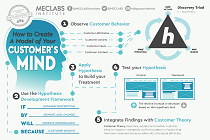
You need a repeatable methodology focused on building your organization’s customer wisdom throughout your campaigns and websites. This infographic can get you started.
Get the Infographic >Infographic: 21 Psychological Elements that Power Effective Web Design
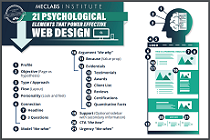
To build an effective page from scratch, you need to begin with the psychology of your customer. This infographic can get you started.
Get the Infographic >Receive the latest case studies and data on email, lead gen, and social media along with MarketingSherpa updates and promotions.