|
SUMMARY:
Identifying your ideal customer is only the first decision. You can still offer something they do not have time to use, underestimate the effort of buying, contact them at the wrong moment, or leave their questions unanswered. These examples show how to make four marketing decisions around what customers need to move forward. |
The Once and Future Landing Page, Part 2: Conversion optimization in the AI era
Join digital marketing pioneer Flint McGlaughlin for this live, interactive AI Guild session on Wednesday, December 2nd at 2:00 pm EST. Register for the free session now (from MECLABSai, MarketingSherpa’s parent company).
It almost feels silly to say, right? Make sure you have the right product to serve your ideal customer.
But there are a myriad of reasons this gets overlooked. Maybe you’re farther down in the organization and don’t feel like you can have input on the product. Or you work on the agency side and don’t want to denigrate your client’s product. Or, like in the example you’ll see in just a moment, you’re focused on what you think the customer needs versus what they actually want.
According to the MECLABS Optimization Sequence heuristic, you should optimize the product factor first, before you optimize the presentation factor, which you optimize before the channel factor.
In other words – the product before the page, the page before the ad.
This isn’t to say other factors aren’t important. Just think of it as the prioritized optimization heuristic, where you put your energies and in what order. From a financial perspective, you don’t want to pay to send prospects to a subpar page that promotes a product they don’t value.
Here’s an example where the fix that worked changed the product offering.
BEFORE
In 2018, the team built a full Instagram Masterclass for Aesthetics course based on the problems they saw practice owners having on social media.
They hired professional hosts and shot it in a professional studio.
They tested different platforms. “We first hosted it on Thinkific, then moved it to Kajabi to make the experience more cohesive. Kajabi let us track progress, but that didn’t matter much because hardly anyone was using it. Then we moved it to LearnDesk,” said Steve Seidel, founder & CEO, The Seidel Agency.
They even pivoted to a new format. “In 2020 the material became a book, The $1 Million Social Solution, on Amazon for $20,” he said.
While they focused on what they thought their ideal customer needed, they originally overlooked what the customer actually wanted.
AFTER
When Seidel got feedback from practice owners, he realized he had a bigger problem than content that would quickly become obsolete due to changes Instagram makes to its platform.
The practice owners didn’t have time to watch a full course. They just wanted social media done for them.
“I built the course around the problems I saw owners having. What they actually wanted was for someone to solve those problems for them,” he said. “Relaunching a better course wouldn’t fix the real problem, which was their time.”
So Seidel pivoted again, this time to services. His agency does the work for the practices. The course is no longer a stand-alone product but given to clients that want to learn.
RESULTS
A dozen people bought the original course after it launched in 2019. The book version sold five copies at $20 each.
After pivoting, the team now uses the tactics taught in the course when they deliver their service, for which they charge a minimum of $2,500 per month.
If he creates a course again, Seidel would build it step-by-step, so he could stay closer to his ideal customer and learn what they want along the way.
“It's starting with an engaged audience that will share what is working and what is not, and what was missed, which you can then address in your next lesson. Sam Ovens does this with Consulting.com. Having a hybrid model of teaching (via video and in group) and then going to do the work, and coming back to review, and then teaching again, so you have real-life examples,” Seidel said.
DIAGNOSTIC QUESTION FOR YOUR BRAND’S PRODUCT AND OFFER
Are customers asking to learn the work – or have it done?
In the previous example, the team tested many monetary prices for their course. $1,500 for a nine-lesson video course. Then $1,199. Then single lessons for $99 each. Before pivoting to $20, for a book.
But now the team is charging a minimum of $2,500 a month, and they’re working with a practice where they’re promoting a large-scale event to promote a device for $6,000.
Which brings up an important factor when determining the right price for your ideal customer – the price they pay is more than monetary.
According to the MECLABS Net Value Force heuristic, the gross force of the cost is both material and mental.
So when looking at your cost, don’t look only at the dollars and cents. What other ways do potential customers have to pay you? Is there a long and confusing signup? Do they need a higher up to sign off on the purchase? Are they worried what you will do with their data?
Or, like in our previous example, a course that asked busy owners for hours they didn't have.
This all counts as mental cost – what the customer has to do, not only what they pay in dollars.
DIAGNOSTIC QUESTION FOR YOUR PRODUCT OR SERVICE’S COST
Beyond money, what must customers spend or risk?
You know the feeling. There are many words for it. Kismet. Serendipity. Providential.
You also know the opposite. Interruption. Annoyance. Hassle.
The difference between getting your marketing message in front of the customer at the right and wrong time is the difference between helping and annoying that customer.
One way to ensure you send at the right time is by triggering your messages based on your customers’ actions.
“Texts triggered by customer behavior, like a browse, an abandoned cart, or a recent purchase, converted at roughly six times the rate of generic broadcast messages,” said Channing Ferrer, chief revenue officer & CEO Americas, Brevo.
He continued, “The action here is usually to return to a product, basket, shipping link, etc. and they are effective because they are follow-ups to intent signals, so the customer showed interest and we send on their schedule, not ours. In that scenario, marketing messages provide a service instead of soliciting.”
DIAGNOSTIC QUESTION FOR YOUR BRAND’S TIMING
What customer action makes this message useful now?
Notice I didn’t say the most persuasive messaging. Or killer conversion copy.
What your customer is really looking for is information to help them make a decision. It’s a good way to think, because you look at what the customer needs differently. Let’s take a search/AI query for example.
Under the MECLABS Synoptic Layered Approach, the first thing a searcher needs to know is ‘What can I do here?’
A slogan doesn't answer that. A title in the searcher's own words answers it on Google's results page, to attract the click. As you’ll see in our next case study.
BEFORE – homepage
Orizon entered the Greek market in 2025 as the country's fourth mobile provider, a challenger brand from energy company Volton.
The homepage’s page title and meta description shown in Google read as follows (all creative has been translated from the original Greek):
AFTER – homepage
“Google Search Console showed every query where Orizon's site appeared, and Google Trends showed which topics were rising,” said Ioanna Anastasaki, co-founder and chief strategy & growth officer, VALUE (the mobile provider’s agency).
The team realized that people comparing providers saw a slogan instead of getting clarity about the company. The team rewrote the titles, descriptions and headings of the key pages in those people's own words and added intro copy and FAQs to landing pages.
For the homepage, the team changed the title and description to:
“The new title uses their [the customers’] words, so someone comparing providers sees in the results page itself that this page has the plans they are looking for,” she said.
The previous page had no main heading (H1) or offers heading (H2), so the team added both to the homepage:
BEFORE – landing page
A landing page for a mobile and energy bundle had the following page title, benefits heading, and FAQ heading:
AFTER – landing page
The team changed the landing page’s page title, benefits heading, and FAQ heading to:
“’What do I gain?’ only made sense to someone already on the page. The new heading carries the whole question and its topic, so it still makes sense when an AI engine lifts it into an answer,” Anastasaki explained.
The original page had no meta description or main heading (H1), so they added:
RESULTS
In May 2026, the organic clickthrough rate from search engine results pages was 5%. Following the change, reported organic CTR rose to 14.8% in June (no offers or pricing changed from May to June).
The website got 2,204 organic clicks in May 2026, but the team noted that June is peak season for mobile plan shopping in Greece, so with June’s higher impressions and a steady clickthrough rate, the site would have received 4,813 clicks.
However, since the CTR increased to 14.8%, the site got 14,246 organic clicks – 9,396 more than it would have with an unchanged CTR.
"For Orizon, it was important to understand the questions consumers are actually asking and together with VALUE, adapt our website content to provide clear and meaningful answers. This has helped Orizon become more visible in AI-driven search results,” said Mary Gogou, digital marketing specialist, Orizon.
DIAGNOSTIC QUESTION FOR YOUR BRAND’S INFORMATION
What must customers know to make their next decision?
This article was distributed through the free MarketingSherpa email newsletter.
Related resources
Marketing Chart: Does customer-centric marketing fall short of satisfying the customer?
Customer-Centric Marketing: Tap into your culture to differentiate from the competition
The Limit Isn't Intelligence Anymore. It's Imagination. (replay of AI Guild Enterprise Strategy session)
AI transparency
This is a human-conceived and -written article, assisted by AI. MECLABSai was used to review source pitches for artificial intelligence usage, evaluate the credibility of potential sources, craft follow-up questions to sources, brainstorm the steps and advice in this article, create Open Graph and CMS thumbnail images, and provide copy-edit suggestions for the article.
Get Better Business Results With a Skillfully Applied Customer-first Marketing Strategy

The customer-first approach of MarketingSherpa’s agency services can help you build the most effective strategy to serve customers and improve results, and then implement it across every customer touchpoint.
Get More Info >MECLABS AI

Get headlines, value prop, competitive analysis, and more.
Use the AI for FREE (for now) >Marketer Vs Machine

Marketer Vs Machine: We need to train the marketer to train the machine.
Watch Now >Live, Interactive Event

Join Flint McGlaughlin for Design Your Offer on May 22nd at 1 pm ET. You’ll learn proven strategies that drive real business results.
Get Your Scholarship >Free Marketing Course

Become a Marketer-Philosopher: Create and optimize high-converting webpages (with this free online marketing course)
See Course >Project and Ideas Pitch Template

A free template to help you win approval for your proposed projects and campaigns
Get the Template >Six Quick CTA checklists
These CTA checklists are specifically designed for your team — something practical to hold up against your CTAs to help the time-pressed marketer quickly consider the customer psychology of your “asks” and how you can improve them.
Get the Checklists >Infographic: How to Create a Model of Your Customer’s Mind
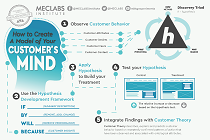
You need a repeatable methodology focused on building your organization’s customer wisdom throughout your campaigns and websites. This infographic can get you started.
Get the Infographic >Infographic: 21 Psychological Elements that Power Effective Web Design
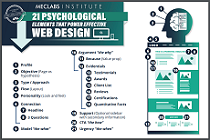
To build an effective page from scratch, you need to begin with the psychology of your customer. This infographic can get you started.
Get the Infographic >