|
SUMMARY:
To get more customer referrals, build a simple, repeatable system instead of relying on one-off referral ‘campaigns.’ In this MarketingSherpa article, we give you a step-by-step process filled with examples to help spark your best ideas. |
Action Box: Custom AI Agent Builder
Train a custom AI agent on your site's content in under 90 seconds. No cost or registration to try the AI Agent Builder (from MeclabsAI, MarketingSherpa’s parent company).
Marketers are often trained to think in terms of campaigns. The word ‘campaign’ has roots in the military. It is meant to be (hopefully) temporary. No military or society wants to be perpetually at war.
However, with referral marketing, a program powered by a defined process is a better way to think about it – a repeatable process that consistently turns customer satisfaction into new customers.
So first, think operationally before you get creative. Get the brass tacks down. When building your program, consider operational questions like:
Start by considering the holistic (program) nature of how you attain referrals versus just looking at it as another one-off (campaign) effort.
Here’s an example of a programmatic way of looking at referral marketing.
SuperStaff is a business process outsourcing company.
BEFORE
The company was getting referrals, but unevenly and dependent on a few strong account managers. The ask was often ‘do you know anyone who could use us?’
AFTER
For Q1 2026, the team standardized the process across the entire account management team and started tracking it like any other pipeline channel.
In terms of who and when to ask, the company has outlined specific triggers:
Their ‘offer’ is a little unique. It’s the principle of reciprocity. They give before they get – by providing a relevant and useful referral for the client to a vendor, a candidate, a peer CEO, or a journalist. “Before we ask, we have already given,” said Matthew Paul Narciso, CEO, SuperStaff. “It gets logged in HubSpot. It is the cost of being allowed to ask later.”
They make it very easy for the client to share. “Our version is a forwardable email we have already drafted, with a specific named prospect we researched off LinkedIn or the client’s own bio page,” Narciso told me.
The team measures the give vs. get ratio of how many recommendations they’ve made compared to how many they’ve received. “You can run all of this with a Google Sheet that has five columns: client name, date last asked, intros given by us, intros received from them, next trigger date,” he said.
When they see the ratio is off, they make a change.
For example, the company had a durable medical equipment healthcare client who referred zero prospects in the first 18 months. They assigned a new account manager who made two warm vendor introductions over the following quarter. At the next quarterly business review, the healthcare client introduced SuperStaff to two peer companies in their network. Both closed within 90 days and added annual recurring revenue of ~$480,000. Pretty good from a client that was previously a not a referrer.
RESULTS
The forwardable email approach converts four times better (four times more introductions) than just asking ‘do you know anyone who could use us?’
They went from getting about a third of new business from referrals to 80% of new business in Q1 once they formalized the customer referral system (33 of 42 new clients).
It could feel right to just blast referral requests out there and hope some customer sees it and responds.
But you have a relationship with these customers. And you don’t want to alienate with them.
If they’re not happy with your company but just holding on, a referral ask might be the tipping point to get them to find another vendor. Or even worse – providing negative word-of-mouth.
You want to tap into the motivation of customers most likely to refer your brand. Here’s an example of how a company did that.
Wow Now Cleaning offers residential and commercial cleaning services in Tampa, Florida.
BEFORE
The team’s referral system featured:
“We used a simple stack,” said Andrii Spivak, owner, Wow Now Cleaning. “SMS/WhatsApp messaging through basic automation [for the trigger], Google Sheets for accounting, and unique personalized links generated manually or using simple no-code tools.”
AFTER
Within one to two hours of a cleaning, clients receive a message asking them to rate the service on a scale of 1 to 5 – essentially, a Net Promoter Score. If they rate it 5 out of 5, a special referral link is unlocked. When a friend uses this link to pay for a cleaning, the client receives a discount on their next service.
RESULTS
When they originally asked all customers for referrals, the team got a conversion rate of five to seven percent. After they filtered for satisfied clients, the conversion rate rose to 18% to 22%.
From a company-logic perspective, it’s clear why you want a referral program – to get more business.
But what’s in it for the customer? Why should they refer your business?
We are marketers. And we can reach into our toolbox to make it even more appealing to give that referral. An expensive service might have a significant financial referral fee. But even a simple consumer product can give an incentive that has monetary value. Take Roku, for example.
"The program really started to go forward after we changed the reward structure," Lomit Patel, then senior director, marketing, Roku, explained in the classic MarketingSherpa case study Email Marketing: Triggered email nets 75% of referral program signups.
Roku tested several different rewards offers and discovered a free one-month Netflix membership (with no limit on rewards) was most effective.
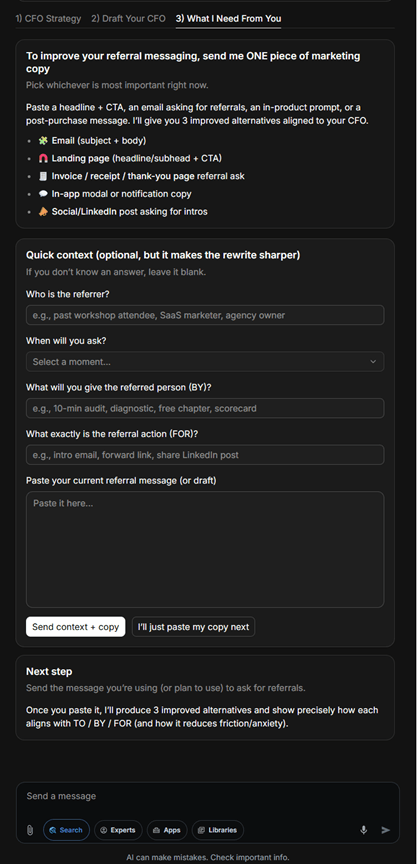
If you need help brainstorming a good offer, you could try the CFO Builder app in MeclabsAI (MarketingSherpa’s parent company) to build the Customer-First Offer for your customer referral program.
Creative Sample #1: CFO Builder in MeclabsAI

It will teach you about the methodology for building a Customer-First Offer and guide you with specific questions to help you build and refine the offer.
Creative Sample #2: CFO Builder collaborating with user in MeclabsAI
There is a natural human desire to build social capital within our cohorts. Even before companies had referrals programs, I’m guessing there were early proto-humans who recommended the best place to gather berries to the rest of their group.
No, they didn’t get a 10% off coupon from Berries, Inc. for doing so. They just wanted to be seen as smart and capable and useful to the rest of the group to build that social capital.
So you don’t only have to give an incentive of monetary value to get that referral, like in our next example.
Dominick Miserandino founded The Celebrity Cafe and is former CEO of The Inquisitr.
After spending 45 seconds on an article page with a scroll depth of 75%, visitors to these content sites got a slide-in from the right that said ‘Show them you were right’ with the option to share the article with friends.
“We targeted high-trust, closed communities. Our system featured a ‘Copy to Slack/Discord’ button that didn't just paste a link – it pasted a pre-written ‘hook’ (a one-sentence summary). It encouraged sharing into private groups where the click-through rate is 5x higher than a public feed,” said Dominick Miserandino, founder and CEO, RTMNexus.
A customer referral is not free for the person or company making the referral. They are spending social capital.
If it works out, their social capital will increase with the friend, colleague or family member they referred to your company. If it doesn’t work out, they will have lost some social capital in their peers’ eyes.
So in some ways, a referral may require even more trust in your company than when they originally became a customer.
While this article is about a customer referral program, this step is crucial if you’re seeking a referral from a company you are partnering with as well.
One way to instill that trust for both partners and customers is for customers to have a surprisingly positive experience with your company – basically, you didn’t just meet their expectations, you exceeded them. Of course, that goes far beyond a referral program to the very way you run your business.
For partner referrals, you can build a reputation by actively and visibly helping out in a company’s community. “I didn't start with the [partner] directory listing. I first contributed to Circle's community by answering questions in the Q+A space, volunteering my time when I had capacity. That is how the team noticed me. The partner directory came roughly a year later, after I'd been recognized as a community contributor,” said Candice Grobler, community experience and operations strategist, Candid Collab.
Another element that is essential for your referral program is giving your customers and partners proof points about your company they can share with their peers and customers when making the referral, proof points that show the prospect is both a fit for your company and will be well served by it.
So it’s not just ‘I had a great experience with [brand]’ or ‘brand is a certified in our partner program.’ The referral becomes ‘I had a great experience with [brand] and they are [x, y, and z].’
There are a lot of PR agencies. So how does an agency build enough credibility to warrant a referral? “I served as Past President of the New York chapters of both the Public Relations Society of America and the Women's Jewelry Association,” said Olga Gonzalez, CEO, Pietra Communications.
Those dual roles helped the agency show they are a credible PR partner for people in a certain industry. And technical credibility is also helped by the fact that they are the only PR agency in the world owned by a gemologist, according to Gonazalez.
Over the past 12 months, 65% of inbound inquiries have come directly through client referrals for the agency.
The whole idea of creating a referral program is building something customers will want to use. Now that you have your internal team’s best ideas on paper, see how they resonate with the people that matter most – your customers.
“In any aspect of marketing, some of your greatest ideas come from existing clients,” John Jantsch, president, Duct Tape Marketing, said in the MarketingSherpa blog post Referral Marketing: 4 case studies.
“Clients can tell the value you bring a lot better than you can. Bring in four or five clients to help you design your [referral marketing] system.”
This is a pretty obvious step. If your goal is to get referrals, make sure you have a process in place to see how well your company is doing.
For a large company, this may be very formal and include tracking links, referral codes, and a partner program. A small company might simply include it in their new customer process.
“It's a SOP (standard operating procedure) now for me to ask how they found out about us – if it's from our ads or a referral or if they found us in the wild on social media / Google listing,” said Austin Jones, founder, Business Goals Group.
While Step #7 is pretty obvious, Step #8 can easily be overlooked.
All referrals don’t come through your official program or official channels. So make sure you’re tracking activity outside of the program as well.
This could be in social media, on Reddit, review sites, in industry forums, etc.
It’s great when you see these referrals happening organically without your input, but when you start taking a closer look you’ll probably see something you don’t like as well – the complaint.
All is not lost when you see these anti-referrals. First of all, they give you customer wisdom about how your product might need improvement.
When you actively find them, they give you an opportunity to publicly serve a customer. Other potential customers will see how you stepped in to help. But you’ve also found someone willing to talk publicly about your brand. This person can be a referral in waiting…if you can turn the relationship around.
"We take those things very seriously. And I will tell you that some of our most loyal guests are people who have had an issue at some point and watched how we fixed it, how passionate we were, how much we cared, and how much we followed up," said Steve Sanner, president, Jiffy Lube of Indiana, in the classic MarketingSherpa article Inbound Marketing: Relevant social media content increases referral traffic by 220%.
This article was distributed through the free MarketingSherpa email newsletter.
Marketing Promotion Strategies: These 3 message levers moved people to click, link, and refer
Get Better Business Results With a Skillfully Applied Customer-first Marketing Strategy

The customer-first approach of MarketingSherpa’s agency services can help you build the most effective strategy to serve customers and improve results, and then implement it across every customer touchpoint.
Get More Info >MECLABS AI

Get headlines, value prop, competitive analysis, and more.
Use the AI for FREE (for now) >Marketer Vs Machine

Marketer Vs Machine: We need to train the marketer to train the machine.
Watch Now >Live, Interactive Event

Join Flint McGlaughlin for Design Your Offer on May 22nd at 1 pm ET. You’ll learn proven strategies that drive real business results.
Get Your Scholarship >Free Marketing Course

Become a Marketer-Philosopher: Create and optimize high-converting webpages (with this free online marketing course)
See Course >Project and Ideas Pitch Template

A free template to help you win approval for your proposed projects and campaigns
Get the Template >Six Quick CTA checklists

These CTA checklists are specifically designed for your team — something practical to hold up against your CTAs to help the time-pressed marketer quickly consider the customer psychology of your “asks” and how you can improve them.
Get the Checklists >Infographic: How to Create a Model of Your Customer’s Mind
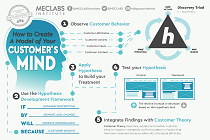
You need a repeatable methodology focused on building your organization’s customer wisdom throughout your campaigns and websites. This infographic can get you started.
Get the Infographic >Infographic: 21 Psychological Elements that Power Effective Web Design

To build an effective page from scratch, you need to begin with the psychology of your customer. This infographic can get you started.
Get the Infographic >