|
SUMMARY:
Prospects don’t withhold data because they’re difficult; they withhold it when the cost (time, privacy risk, effort, fear of misuse) feels higher than the benefit. To improve data collection, ask only for information that truly serves the prospect, make the value exchange explicit, ask at the right moment(s) in the customer journey, reduce anxiety at the point of disclosure (especially for sensitive questions), and ‘show, don’t tell’ by revealing the cost of withholding information. Read on for more details and real-world examples. |
Action Box: Click-simple AI workflow to implement this method
If you want help with the steps in this article, here’s a click-simple MeclabsAI workflow: How to get prospects to share the data you need to provide a better customer experience (MeclabsAI is MarketingSherpa’s parent company).
Let’s try to put ourselves in the customers’ shoes for just a moment.
“Data is the new oil” Clive Humby famously said. To take that analogy a step further – that’s great for the oil company, but if they decimate your backyard with drilling rigs and pollution, you probably won’t be too happy about it.
That is the backdrop for asking your customers for their information. Not only are they constantly being hounded, but they also know that many companies passively collect information. And do they really understand the benefit of all this extraction of their (sometimes very personal and private) data?
This first step may seem obvious, but I’ve seen it overlooked for a myriad of reasons:
So stop seeing it as ‘free’ to ask for more and more information, and push back on any and every internal request for yet another piece of data. A few essential questions you can ask:
Essentially, respect your prospects.
“This is someone's time that they're not spending walking their dog. They're not cooking dinner. They're not with their kids. Is what you're doing important enough for them to take a pause and spend time with your brand?” Dana Bodine, US VP of Marketing, Trustpilot, told me in Customer-First Marketing: To truly be customer-obsessed, respect the customer’s time (podcast episode #149).
Remember, while there may not be a monetary cost to ask for more info, there can be a conversion cost.
For example, when the team at Bacula Systems removed two form fields – asking if they prospect is already using Bacula and how many machines they needed to protect – it’s trial form conversion rate improved 43% with no degradation in lead quality. “Why should our prospects need to spend time collecting the number of machines used in their company?” asked Andrei Iunisov, Director of Digital Marketing, Bacula Systems.
You can see the full case study in Low-budget Lifts: B2B example of getting big results with a small marketing budget.
Now that everything you’re asking of the customer has real value for them, make sure you clearly communicate what that value is. Then, this becomes like any other purchase decision – I give X and I get Y. The only difference is they pay with information, not money.
If they value what your brand can give more than the cost they perceive to providing that info, they will provide the info (if you’re unfamiliar with the concept of value exchange, you can learn more in Congress has a value exchange problem … do your marketing offers?).
The value exchange doesn’t always have to be a grandiose thing. It could be a small step. For example, to determine which products were most popular, the team at Valencia CF held ‘product battles’ where fans would vote on their favorite product for a chance to win it (you can see the example in Customer Engagement: Marketing case studies from Coors Light, a professional soccer team, and a private jet charter).
This was a small step to start getting to know its customers better and building an engaging relationship while doing it. “As consumers are involved in data collection and willingly provide information about themselves it becomes part of their experience with the brand,” said Quentin Paquot, CEO, Qualifio (Valencia CF’s data collection and interactive marketing platform).
Let’s try a little experiment. I want you to tell me how much you pay in property taxes. I’m easy to find on LinkedIn, Facebook, X (Twitter). Just reach out to me and share this info with me.
I’m guessing my conversion rate on the above request will be nil. Yet, when the same request came up with my neighbor, we readily shared this information with each other.
The difference – timing and trust. I’ve known him for a decade, and you and I have probably never met each other.
This is an extreme example, but it calls attention to a challenge many brands face – we’re so focused on what we want/need from prospects sometimes we ask for information that they might give us if they trusted us more…but are not ready to provide yet.
To get ideas for how much to ask of your customers and when to ask it, take a look at our next example.
BEFORE
The team at Fruzo measured customer experience by the number of meaningful matches, which they defined as any first interaction that led to a user-scheduled second meeting within seven days.
Quantitative data alone was insufficient to improve this metric. For example, if they looked at data like call duration, they couldn’t know if the call was 30 minutes of awkward silence or 30 minutes of flowing conversation.
So they attempted to get qualitative customer information with a permanent survey in the settings menu, essentially asking customers to tell them everything all at once.
AFTER
The team asked a hyper-specific, scenario-based question about a single, recent interaction immediately after it occurred.
After a video call ended, a subtle, non-blocking card appeared with a question like: ‘How did that conversation feel?’ with three buttons ‘Easy & Flowing,’ ‘A Bit Awkward,’ and ‘Struggled to Connect.’
Tapping any option expanded a single optional follow-up: ‘What made it feel that way?’ with a clear option to ‘skip.’
The request included a one-sentence explanation of how that specific data point would benefit the customer. For example, ‘This helps us show you profiles of people who share your conversation style.’
To further help instill in customers that the brand was using data to serve them, the team offered anonymized, aggregated benchmarks. For example, ‘You talked for 15 minutes, 80% of conversations that last this long lead to a second meeting.’ “This transformed data sharing from an extraction into a valued exchange,” explained Isabella Rossi, CPO, Fruzo.
RESULTS
Quality responses increased 4x. That data directly informed a feature update that increased meaningful user matches by 22%.
“You can’t ask for trust, you have to architect an experience that earns it incrementally,” Rossi advised.
Now you’re asking at the right time in the customer journey, but your prospects will still have concerns. In Step #2 we sought to accentuate the positive, in Step #4 we also try to eliminate the negative.
Because the data that will best inform you so you can help a prospect is also likely to be the info they are most reluctant to share. It could be total assets for B2C, or budget for B2B.
Any steps you take to reduce your prospect’s anxiety about divulging information should be placed as close as possible to the sensitive questions, don’t just bury privacy assurances in a generic privacy policy. Here are some examples to get you thinking:
The last bullet point brings up an essential topic – consider not just how you ask for information in a form, but also what info would be better to ascertain through a human conversation…like in our next example.
BEFORE
Many patients withheld physical ailments during Ruth Health’s 25-question digital patient intake form.
AFTER
Before asking the most invasive questions, the team interjected stories from clinicians about their own personal struggles with wellness.
RESULTS
During a six-month evaluation window, completed health profiles increased 42% (the team defined completed as ‘all mandatory clinical fields are populated’). Accuracy also improved – a 30% decrease in newly discovered facts during follow-up appointments.
Sara Cemin learned this approach from her time at Ruth Health and now uses it in her current role at Helio Cure. She shares her personal history of recovering from injuries before asking prospects to rate their pain level.
The team at Helio Cure also tries to reduce anxiety by using plain text email communications (with no marketing banners) to stimulate direct personal communication.
“We have found that humans are more truthful to another human than to a computer system,” explained Cemin, head of customer relations, Helio Cure.
The most effective marketing I’ve seen in my career follows the classic writer’s maxim – show, don’t tell. So after you’ve gathered the information the prospect has provided, show what you can and can’t responsibly do with partial information.
For example, show what you can infer now in a diagnostic output (say, by reviewing publicly available information like providing an analysis of their current website or campaign) but also how you could improve that analysis with one or two specific added inputs (like traffic and margins so you can provide ROI projections).
Or show a templated output that is personalized with partial data, and then clearly missing other insights that need further info.
This approach reframes information disclosure as a path to better outcomes for them, not as a favor to you. Here’s an example.
BEFORE
Medical practices typically get patient history through standard intake forms and patient interviews, but there can be intentional (e.g. smoking history) and unintentional (e.g. family cardiac history) withholding of key information.
“As an anesthesiologist and MBA graduate from Oklahoma State University, I have identified a large clinical gap where…patients do not identify serious disease until they experience an acute event requiring an emergency response,” explained Dr. Jason Schroder, medical director and co-founder, Craft Body Scan.
AFTER
Dr. Schroder has found that showing patients the current state of their health before a patient interview encourages them to share more, and more accurate, information…before they are in a health crisis.
For example, a 3D-image of their lung tissue to visually see how their lifestyle decisions have affected their lungs. Or a visual representation of their visceral fat.
“There is no better way to obtain [a complete dataset] than having the patient view the physical evidence on a screen,” he said.
This article was distributed through the free MarketingSherpa email newsletter.
How to transform customer feedback into actionable marketing insights
3 types of customer needs (and how companies solved these needs with their marketing)
Marketing Research Chart: How customer understanding impacts satisfaction
In the researching and writing of this article, MeclabsAI was used to help brainstorm steps, craft follow-up questions to help get specific examples from sources and provide proofreading/editing suggestions.
Join our thousands of weekly case study readers.
Enter your email below to receive MarketingSherpa news, updates, and promotions:
Note: Already a subscriber? Want to add a subscription?
Click Here to Manage Subscriptions
Get Better Business Results With a Skillfully Applied Customer-first Marketing Strategy

The customer-first approach of MarketingSherpa’s agency services can help you build the most effective strategy to serve customers and improve results, and then implement it across every customer touchpoint.
Get More Info >MECLABS AI
Get headlines, value prop, competitive analysis, and more.
Use the AI for FREE (for now) >Marketer Vs Machine

Marketer Vs Machine: We need to train the marketer to train the machine.
Watch Now >Live, Interactive Event

Join Flint McGlaughlin for Design Your Offer on May 22nd at 1 pm ET. You’ll learn proven strategies that drive real business results.
Get Your Scholarship >Free Marketing Course

Become a Marketer-Philosopher: Create and optimize high-converting webpages (with this free online marketing course)
See Course >Project and Ideas Pitch Template

A free template to help you win approval for your proposed projects and campaigns
Get the Template >Six Quick CTA checklists
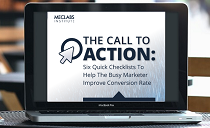
These CTA checklists are specifically designed for your team — something practical to hold up against your CTAs to help the time-pressed marketer quickly consider the customer psychology of your “asks” and how you can improve them.
Get the Checklists >Infographic: How to Create a Model of Your Customer’s Mind
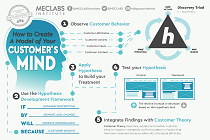
You need a repeatable methodology focused on building your organization’s customer wisdom throughout your campaigns and websites. This infographic can get you started.
Get the Infographic >Infographic: 21 Psychological Elements that Power Effective Web Design
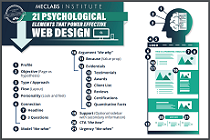
To build an effective page from scratch, you need to begin with the psychology of your customer. This infographic can get you started.
Get the Infographic >Receive the latest case studies and data on email, lead gen, and social media along with MarketingSherpa updates and promotions.