|
SUMMARY:
Before you try to get someone to take action, write one clear sentence about what they should believe (the promise), so you can prove it with the right evidence. Read on for a step-by-step guide with real-world examples. |
Action Box: The New Economics (and Philosophy) of Value in the AI Era
Learn how businesses can describe and price their value in the AI era. Join us for a free AI Guild session on Wednesday, September 2nd, at 10 am EDT. Register now (from MECLABS AI, MarketingSherpa’s parent company).
Sometimes we marketers and entrepreneurs think in terms of goals. ‘I have to get people to watch more demos.’ ‘We need more shows for our webinar.’ Or simply, ‘I got to get more sales this quarter!’
But back it up just a minute.
Before any prospect will take those actions, they must believe something. About your company. And also about themselves.
The thing they must believe about themselves is they need your product or service, or just simply what you’re providing in this offer, because it helps them solve a problem or meet a goal.
And then they must believe that your company will come through in a specific way to make the possible a reality.
Credibility problems start because the brand doesn’t state the claim clearly enough to evaluate what proof is required.
So to take a customer-first marketing approach, start with the customer’s pain point or goal. Some examples:
And then write your primary claim in one clear sentence, based on the prospect’s felt pain or unrealized goal. Some examples that correlate with the previous customer pain points and goals:
If you can’t write the claim plainly, you can’t prove it plainly.
How hard is your claim to believe?
Not all claims require the same proof. A modest claim can be supported with modest evidence. Paradoxically, if you include too much proof for a relatively minor claim you could raise red flags among your ideal prospects – ‘why are they trying to sell this so hard?’ As Shakespeare said in "Hamlet," "The lady doth protest too much, methinks."
And of course, a big claim creates a big belief burden.
Belief Burden Decision Framework
Here’s a framework I’ve developed to help you scope the belief burden:
Explanatory infographic made with artificial intelligence (specifically, MECLAS AI) showing examples belief burden ranking
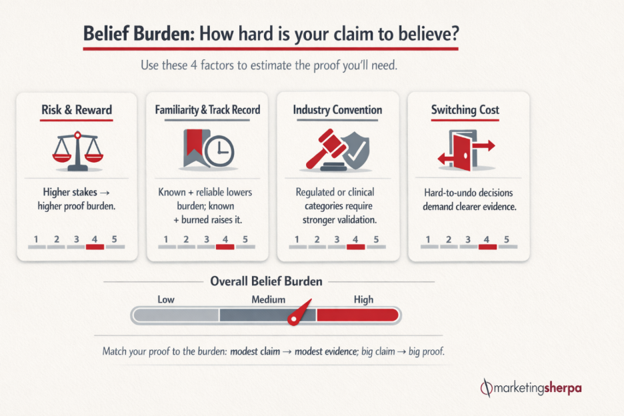
I’m providing you these factors because no claim exists in a vacuum. The water in which your ideal prospects swim affects how they evaluate the belief burden of your claim.
Let’s take a look at a common claim – fast shipping – and see how the belief burden varies based on the context.
In one scenario, I just put a water filter into my fridge, and so I want to get another one to have on hand for when this filter is full in six months. The risk and reward are low. I’m buying from The Home Depot, which has often delivered on time. Many local retailers have local delivery contractors, and I’m a consumer who has no responsibility beyond my kitchen. And if it doesn’t work out, I can just walk into a store in the next six months and pick it up myself. Low belief burden.
Now, let’s say I’m producing an event and pre-sold a recording of it, but the airline broke the professional-level camera we brought. The event is tomorrow and we need a new camera. The risk and reward are high, we sold a lot of these recordings and if we don’t capture the event tomorrow, it’s over. I have a high familiarity with trying to get A/V shipped in time for an event, but it’s a poor track record. The mics didn’t show up on time last year.
The industry convention is that the receiving dock at this venue can only take in items at certain times, and needs to know when the item will arrive ahead of time. And the switching cost is high. If I don’t get it on time, I’m paying someone to buy the right camera in LA and hope on a plane to get to this remote venue quickly.
Those are two extreme scenarios with especially low and high belief burdens. Here’s a real-world example where industry convention is an especially important factor. While the team focused their message on features – an approach that could have worked in other industries – this industry required more credibility.
BEFORE: Convenience-led claims
Mentage’s original claim for its cognitive wellness platform led with convenience, framed as a modern, easy-to-use digital tool families could complete at home.
However, the team discovered a credibility gap after conducting 17 discovery interviews with primary care providers, specialists, and community aging organizations to test its value proposition.
Clinicians said they distrust tools without clinical expertise and independent validation. Messaging that focused on convenience and modern technology did not overcome weak clinical credibility or uncertainty about whether digital measures reflected real function. And the clinicians still needed to see independent validation, clinical expertise, and evidence tied to daily functioning.
AFTER: Evidence-led credibility
The team added a credibility section built on independent validation and named clinical expertise.
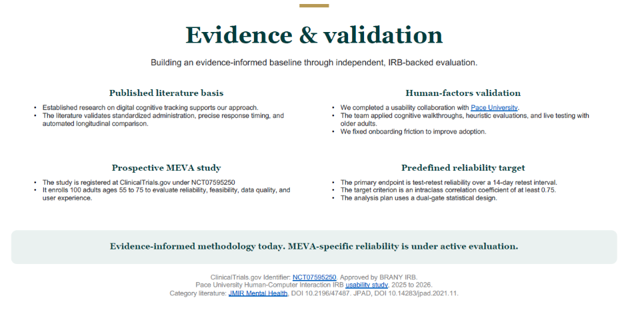
The section attempted to start adding the credibility clinicians demanded: published literature basis, human-factors validation, and a prospective, independently registered Institutional Review Board-backed study (‘ClinicalTrials.gov NCT07595250’).
Creative Sample #1: ‘Evidence & validation’ slide from the ‘Meet MENTAGE’ pitch deck
They also rewrote the messaging, to lead with prevention and longitudinal tracking.
"Clinicians don’t reject new tools because they are unfamiliar with technology. They reject tools that ask for trust without offering proof. Published data and independent validation aren’t formalities; they are the difference between a tool a provider can stand behind and one they must ignore,” said Aimee Pathyil, PA-C, chief health education officer, Mentage.
RESULTS
The repositioned, credibility-led pitch helped the team secure its first pilot.
“I always say, no one wants to hear a marketer talk about what the company does. The best marketing leads with data and stories,” Rebecca Biestman told me in Authentic Brand Transformation: To build a brand that lasts, consider rebranding a team sport (podcast episode #137).
Data and stories are two ways to support your claim. But which should you use? And what others exist?
Credibility works best when there is claim-evidence match – the proof is the right kind of evidence for what you’re asking the customer to believe.
So based on what you’re asking them to believe (Step #1) and how big of a leap of faith they need to make (Step #2) decide what format(s) is best to make your claim believable. Some example questions your prospects may have about your claims:
Here’s an example. Constant Contact markets itself with the claim ‘The #1 digital marketing platform for small businesses*’ which it then backs up with data for proof – ‘*Based on February 2026 publicly available data on competitor campaigns sent.’ That data addresses the ‘does it work?’ question prospects have by utilizing most-used data as a proxy to help prospects come to the conclusion that ‘if most small businesses use it, therefore, it must get good results, and perhaps the best results.’
But someone working at a small business likely has another question as well – ‘Even if it works in general, will it work forme?’ They may wear many hats, and marketing is just a small part of what they do in their average day.
To help with credibility around this customer anxiety, here’s an example of how Constant Contact crafted a story about marketing novices.
BEFORE: Sponsorship-as-logo
Sports sponsorships typically focus on a logo on a shirt, a hospitality box for clients, and ads featuring star players. It’s visible, but it isn’t believable – because none of it functions as proof that the sponsorship actually creates meaningful impact for the audience or the business.
AFTER: Watch real non-marketers use the tool
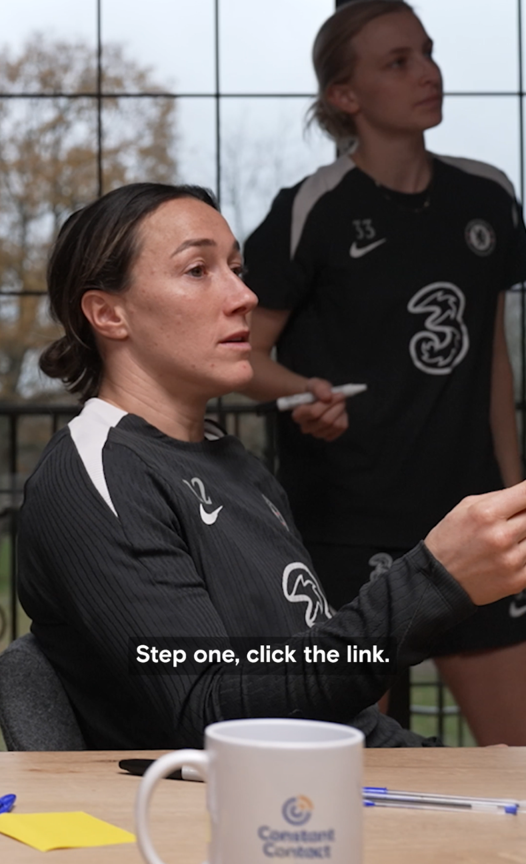
For Constant Contact’s sponsorship of Chelsea FC Women, players were given hands-on access to the marketing platform and tasked with creating and sending a campaign, promoting a Barclays Women's Super League fixture.
“We wanted to explore something different by giving the players direct access to the same marketing tools used by millions of small businesses and making them active participants in the campaign itself,” said Berit Block, senior director of international marketing, Constant Contact.
The player‑created campaign generated 573,000 impressions, 526,000 video views, and a 9.8% engagement rate.
The Constant Contact team then created social content around the players making the emails. They didn’t just say ‘our tool is usable by non-marketers’ – they demonstrated it by putting the tool in players’ hands and measuring outcomes.
Creative Sample #2: Still from behind-the-scenes video showing professional soccer players planning email campaign using Constant Contact
“Whether you're an athlete, an entrepreneur or a business owner, growth happens when talent is backed with opportunity,” said Frank Vella, CEO, Constant Contact.
Now let’s get down to brass tacks – crafting the actual proof. And to do that, get as specific as possible.
Let’s think about it in human terms for a moment. I’m sure you’ve had a conversation with someone you suspected of lying to you because they were overly general in their responses. In a human back-and-forth conversation, you can ask follow-ups to drill down.
When I would interview potential job applicants, I looked at the software or tools section of the resume and ask them about platforms they claimed to be highly proficient in. If they could get specific, they were more believable. But the general answers I chalked up to resume padding.
Of course, for most of your marketing (with the exception of a custom AI agent on your website), the customer can’t ask a follow-up. They’ll simply see a claim, either believe it or not, and that will shape the next action they take.
So if you can, pass your proof by potential customers and see if they have any follow-up questions. Use that info to strengthen the specificity of your claim. Or, build a synthetic customer in AI and see what follow-up questions it has.
While the specifics you need will vary by industry, ideal customer, product type, etc., here are some questions that it makes sense for most brands to answer for proof that relies on data and/or a story:
When you start looking at proving your claims with specificity, you can start to see your funnel in a whole new light. Here’s an example of an agency that switched from a focus on their offer to specificity about the customer’s situation and how exactly they can help.
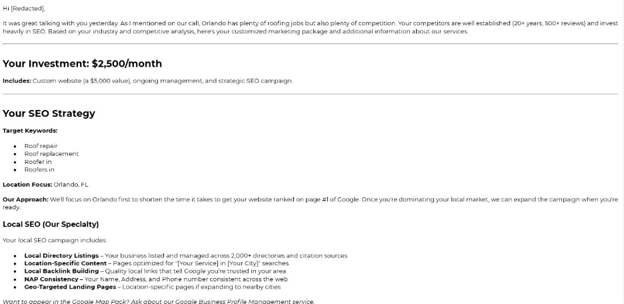
BEFORE: Here’s what we do
The team sent an email after the initial phone call.
Creative Sample #3: Anonymized follow-up email, before
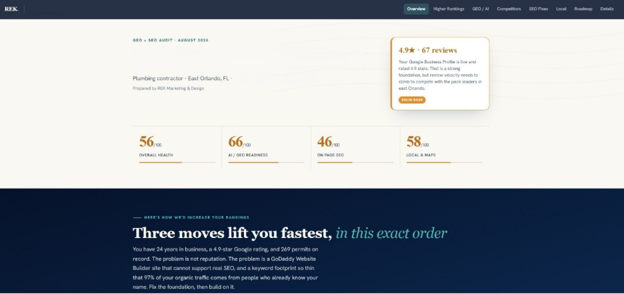
AFTER: Here’s what’s wrong with your site and what it means
The team changed to sending a website SEO audit following the initial call. “It helps build credibility and is a helpful asset that shows objective data about what is wrong with the company’s current digital footprint,” said Dave Lertola, operator, REK Marketing and Design.
Creative Sample #4: Excerpt from anonymized custom website SEO audit
Which also resulted in a much simpler follow-up email.
Creative Sample #5: Anonymized follow-up email, after
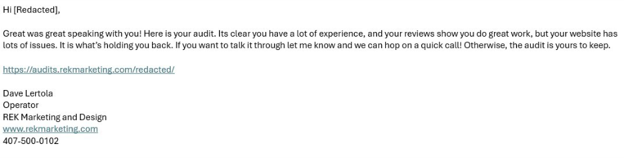
“The services that we provide [did] not change. The difference is that we are getting specific about what work we will be doing,” he said.
RESULTS
The team made the change in March 2026. Conversion increased from 12.8% to 31.25% for organic leads. From September 2025 to March 2026 they lost 61 deals and won nine deals. From March 2026 to July 2026, they lost 44 deals and won 20 deals.
“Our original email was completely focused on our company and the services that we provide. The audit that we present to the customer flips that perspective and focuses almost entirely on the customer’s account, website, and digital footprint,” Lertola said. “There is a small call to action at the bottom of the report outlining the roadmap and how we would go about fixing those items but the vast majority of the content included in the audit is focused on the customer.”
This article was distributed through the free MarketingSherpa email newsletter.
Related resources
Transparent Marketing: How to make your product claims credible … not incredible
Credibility: 9 elements that help make your marketing claims more believable
How to fix a weak value proposition
AI transparency
This is a human-conceived and -written article, assisted by AI. MeclabsAI was used to review source pitches for artificial intelligence usage, evaluate the credibility of potential sources, craft follow-up questions to sources, brainstorm the steps and advice in this article, create Open Graph and CMS thumbnail images, make the explanatory graphic in Step #2, and provide copy-edit suggestions for the article.
Get Better Business Results With a Skillfully Applied Customer-first Marketing Strategy

The customer-first approach of MarketingSherpa’s agency services can help you build the most effective strategy to serve customers and improve results, and then implement it across every customer touchpoint.
Get More Info >MECLABS AI

Get headlines, value prop, competitive analysis, and more.
Use the AI for FREE (for now) >Marketer Vs Machine

Marketer Vs Machine: We need to train the marketer to train the machine.
Watch Now >Live, Interactive Event

Join Flint McGlaughlin for Design Your Offer on May 22nd at 1 pm ET. You’ll learn proven strategies that drive real business results.
Get Your Scholarship >Free Marketing Course

Become a Marketer-Philosopher: Create and optimize high-converting webpages (with this free online marketing course)
See Course >Project and Ideas Pitch Template

A free template to help you win approval for your proposed projects and campaigns
Get the Template >Six Quick CTA checklists
These CTA checklists are specifically designed for your team — something practical to hold up against your CTAs to help the time-pressed marketer quickly consider the customer psychology of your “asks” and how you can improve them.
Get the Checklists >Infographic: How to Create a Model of Your Customer’s Mind
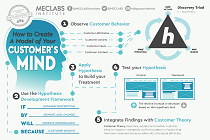
You need a repeatable methodology focused on building your organization’s customer wisdom throughout your campaigns and websites. This infographic can get you started.
Get the Infographic >Infographic: 21 Psychological Elements that Power Effective Web Design
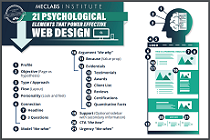
To build an effective page from scratch, you need to begin with the psychology of your customer. This infographic can get you started.
Get the Infographic >