|
SUMMARY:
When you’re marketing a product, you sell a thing. Your goal is to show how your thing is better than the competitors’ things. However, for some brands – like hotels, destinations, event venues, restaurants, etc. – the customer is buying an experience. And your job is to help them conclude that this is an experience worth investing their money, time, and effort in it. Read on for four real-world examples to give you ideas for your own travel and leisure marketing. |
Action Box: Maximize your guest revenue with an intelligent booking agent
Easy Agent Builder takes your website URL and automatically creates a ready-to-install AI chat agent that helps turn visitors into bookings/sales. Get started with $100 in free credits, no credit card or login required (from MECLABS AI, MarketingSherpa’s parent company).
Your customers experience your brand even before they step foot in the door.
For example, I’m the one in my family who plans trips. Books the airline tickets. Finds the hotel. Does the research to know ahead of time that only Lyft picks up from the airport, not Uber.
This is a cost to me any time my family goes on a trip –remember, when a prospect is making a purchase decision, they don’t only consider monetary costs – and it often feels like a staycation would just be less costly time-wise.
So consider your customer’s decision path before they ever arrive at your door. How can you make that part of the experience instead of feel like extra work? How can you organize and present choices so they feel enjoyable and not like work?
Here’s one idea.
BEFORE
Flying Carpet Travel’s content sat passively on its site waiting to be searched.
AFTER
The digital destination marketing portal built an interactive tool on its website using MECLABS AI (MarketingSherpa’s parent company) to help prospects make travel arrangements.
Users could type with or even speak to the AI-powered travel assistant, named Lily. Lily helped prospects with trip planning, curated safari recommendations, even provided food-and-culture guidance.
“[Prospects can] can have a natural conversation and learn from this agent without having to browse a website,” explained Flint McGlaughlin, CEO, MECLABS AI.
You can see the agent in action in the below video.
Creative Sample #1: AI-powered travel assistant in action
As I said, I tend to be the one doing the ‘pre-work’ for my family’s trips.
But I don’t take those trips alone.
So while I’m the one doing the pre-work, I’m not the sole decision maker. I also have to influence others to make this decision with me.
If you market a place or experience, you’re not just selling lodging, tables, or tickets. You’re selling understanding of what an experience will be like and why it would be enjoyable, and confidence that the hoped for value will actually be delivered on.
Understanding and confidence comes from:
A tangible way to deliver on this is by putting something in your ideal prospect’s hands that makes the place easier to understand and believable, something they can share to influence the key decision makers in their life.
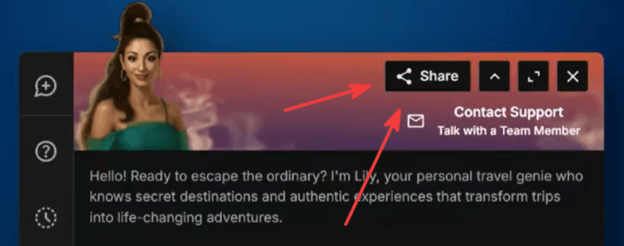
A digital or AI tool can be helpful here to help them envision and believe the experience, as shown in Strategy #1. For example, that AI agent had a share function so users could send what they discovered to a spouse or friend.
Creative Sample #2: ‘Share’ button to send AI agent conversation with a travel companion
Here’s another example, in this case physical. A well-made, printed publication can feel like a trusted object as well.
Quick Example: Villa rentals agency publishes print magazine to elevate a small, seasonal destination
“I own and manage Torre Delle Stelle Real Estate SRL together with my brother, David De Clercq,” Nathalie De Clercq told me. The real estate agency manages and rents villas and B&Bs in a seaside village in South Sardinia and manages food and beverage businesses in the town as well.
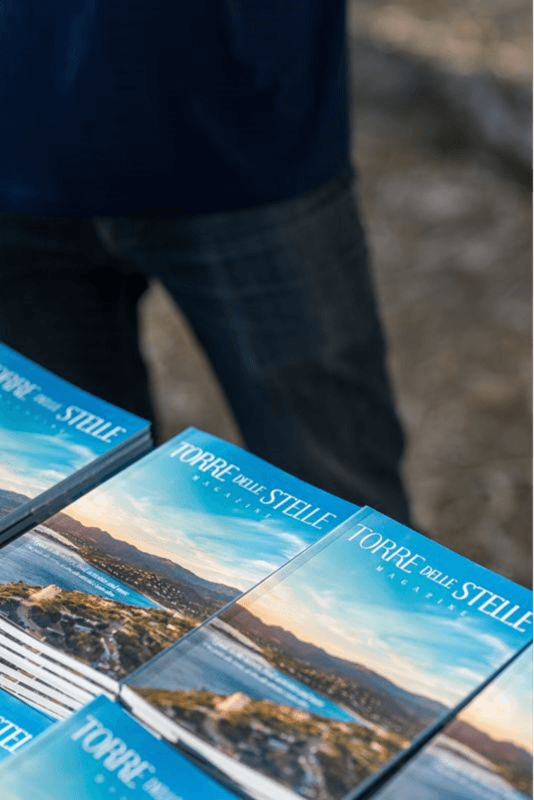
The team started publishing a print magazine as a destination marketing tool.
Creative Sample #3: Copies of Torre Delle Stelle Magazine at launch party
The team included every local business for free but also sold advertising pages to local businesses that wanted a larger presence.
“We publish one issue per year, so it is a seasonal magazine. It is printed in mid-May and distributed throughout the summer season,” Nathalie De Clercq said.
In the first year, 2,000 copies were printed. In this, the second year, the team increased the print run to 5,000 copies since the first issue was so well received.
The first edition took around six months to create. The second edition took four months. The team consisted of:
The team was able to break even on the print magazine by selling ads. They use QR codes to connect readers directly to businesses, services, bookings, and more information.
“The businesses and service providers featured in the magazine have told us that they receive bookings and inquiries from people who found them through the magazine,” Nathalie De Clercq said.
Vacation packages are common in the tourism industry. After buying your plane ticket, the airline would be happy to sell you a hotel room and rental car as well.
But why? Often to get a cut of the revenue.
A customer-first marketing approach begins by asking what’s in it for the customer. How can you put the pieces together to maximize value for the customer? You may get the same (or hopefully more) revenue by taking this approach, but only because it stems from the right goal – creating a better customer experience.
And the vacation package is just one example. Think about what your ideal customer wants, and how you can assemble that experience for them. Even if – like in our next example – that experience bundling involves getting what would otherwise be thought of as competitors to row together in a joint effort…and be part of a new brand.
BEFORE
Craft beverage businesses in Westchester County were supported through general tourism marketing efforts, as well as business-level efforts.
AFTER
The team combined stand-alone businesses into a connected experience.
To showcase its breweries, cideries and distilleries, Westchester County Tourism & Film launched the Westchester Craft Beverage Trail (WCBT) on April 2, 2024. The team created a free mobile passport experience – no app download required – for users who were at least 21 years old. They could earn rewards at 23 participating locations.
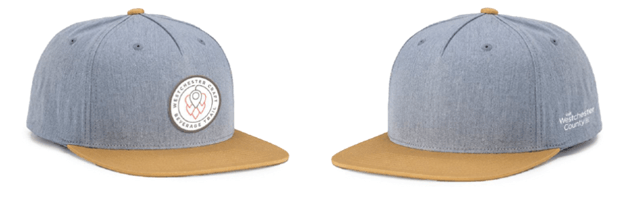
To announce the new trail, the team sent a custom mailer with branded hats to journalists in niche beverage verticals and micro-influencers with loyal audiences.
Creative Sample #4: Westchester Craft Beverage Trail hats
The team then conducted a sustained PR and influencer relations campaign through August 2025.
All told, Westchester invested less than $20,000 in the campaign. “You don’t need a big budget, just a focused strategy,” said Trish Nugent, SVP – head of PR & PA and travel & tourism lead, Mower (Westchester’s agency).
RESULTS
“When breweries, wineries, distilleries and cideries work together to showcase the region, everyone benefits – from the makers to the visitors discovering Westchester one stop at a time,” said Kristen Stone, founding partner & head of marketing, Broken Bow Brewery (trail participant, and host for the April 2024 kickoff event).
The campaign earned 135 media placements, influencers produced 44 content pieces that produced 1.9 million social content impressions and 9,668 engagements, and the Westchester County Tourism NY Instagram account gained 10,059 followers during the campaign. The team estimated the equivalent ad value of the editorial at $4.1 million.
“The campaign generated a 209x ROI based on earned media and social value, with readership and equivalent ad value sourced from Muck Rack and social performance sourced from Sprout Social and Meta Business Suite Analytics,” said Jenna Bush, account supervisor, public relations & public affairs, Mower.
The Ritz-Carlton’s famed motto is “We are Ladies and Gentlemen serving Ladies and Gentlemen.” The luxury hotelier’s motto is not “The Ritz-Carlton Hotel Company, L.L.C., a wholly-owned subsidiary of Marriott International, Inc. (NASDAQ: MAR), serving Ladies and Gentlemen.”
Admittedly, the second motto doesn’t quite roll off the tongue as well.
But also, brands and companies don’t serve up experiences. People do. As Flint McGlaughlin has said in The Web As A Living Laboratory, “People don’t buy from websites; people buy from people.”
Note, even in the first example in this article, the AI is personified as ‘Lily.’ Generative artificial intelligence has been so successful because it feels like chatting with a person, when really, the interface is just a parlor trick – a computer program uses a large language model to predict the most likely next words, based on patterns learned from lots of text, then sends that generated reply back to you.
In some instances, the most effective way you can bring humanity to an experience is with that AI parlor trick – like doing pre-work for a trip on a website.
In other cases, it makes sense to leverage the real human(s) you have behind your brand, like in our next example.
BEFORE
Simply Fish Seafood’s marketing strategy had relied on discounts and promotions.
The team shifted marketing strategy to focus on value instead of just cost reduction, and ran ads about the live entertainment and overall atmosphere at the restaurant.
Creative Sample #5: Example of previous ad focused on live performances at restaurant
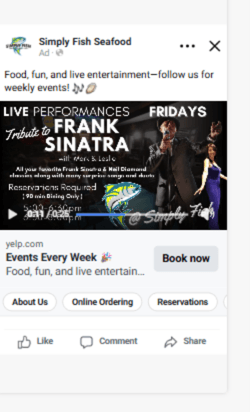
“As the restaurant entered a seasonal slowdown, [owner] Derek [Taguchi] wanted a more sustainable way to grow the business without sacrificing margins,” said Jace Kovacevich, co-founder and COO, Dishio (the restaurant’s growth engine platform).
AFTER
Next, the team decided to try humanizing the restaurant. They created and boosted video content featuring Taguchi's fishing background, seafood expertise, and behind-the-scenes stories around three pillars:
For example, in one ad for entertainment, the video starts with the live music performers mid-set, and cuts to Taguchi personally inviting customers to the restaurant with copy that sells the experience with info about the performers on-screen.
Creative Sample #6: Owner-led ad for live performances at restaurant
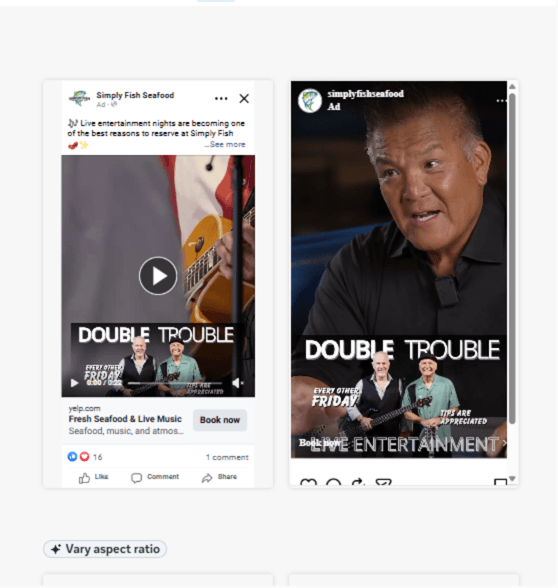
To engage patrons once they visit, the team introduced stickers and signage throughout the restaurant with QR codes that promoted a secret menu. Return guests were encouraged to scan as well, since new items were regularly rotated onto the secret menu.
RESULTS
The QR codes generate 500 scans per month, turning unknown walk-ins into known guests.
The owner-led reels have produced the restaurant’s top two performing ads. The ad mentioned above from June 2026 generated 1,028 clicks at a cost per click of $0.39.
Guests regularly mentioned discovering the restaurant through its videos and online content, and Taguchi said people recognized him from his videos when he entered the dining area.
The new owner-led, value-forward approach helped the restaurant grow revenue versus the discount-led approach. For example, order counts were essentially flat between January 2025 and January 2026 (3,485 tickets vs. 3,477) but the average check increased 10.4%.
Build. Deploy. Monetize. A demo of the upcoming MECLABS AI Automated Commerce Engine.
Advertising Research Chart: Customer perception of what makes a travel ad effective, by age group
Hospitality Marketing: Have a Gumby attitude to any launch (Podcast Episode #20)
Get Better Business Results With a Skillfully Applied Customer-first Marketing Strategy

The customer-first approach of MarketingSherpa’s agency services can help you build the most effective strategy to serve customers and improve results, and then implement it across every customer touchpoint.
Get More Info >MECLABS AI
Get headlines, value prop, competitive analysis, and more.
Use the AI for FREE (for now) >Marketer Vs Machine
Marketer Vs Machine: We need to train the marketer to train the machine.
Watch Now >Live, Interactive Event

Join Flint McGlaughlin for Design Your Offer on May 22nd at 1 pm ET. You’ll learn proven strategies that drive real business results.
Get Your Scholarship >Free Marketing Course

Become a Marketer-Philosopher: Create and optimize high-converting webpages (with this free online marketing course)
See Course >Project and Ideas Pitch Template
A free template to help you win approval for your proposed projects and campaigns
Get the Template >Six Quick CTA checklists
These CTA checklists are specifically designed for your team — something practical to hold up against your CTAs to help the time-pressed marketer quickly consider the customer psychology of your “asks” and how you can improve them.
Get the Checklists >Infographic: How to Create a Model of Your Customer’s Mind
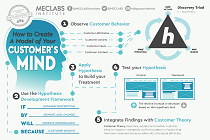
You need a repeatable methodology focused on building your organization’s customer wisdom throughout your campaigns and websites. This infographic can get you started.
Get the Infographic >Infographic: 21 Psychological Elements that Power Effective Web Design
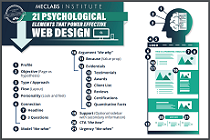
To build an effective page from scratch, you need to begin with the psychology of your customer. This infographic can get you started.
Get the Infographic >