|
SUMMARY:
This article explains how to craft a credible ‘why us’ value proposition that persuades without hype. It argues that strong marketing starts internally by defining, in customer-first terms, what your company uniquely delivers – and then proving it with specifics rather than generic adjectives. Read on for a step-by-step approach with specific examples. |
Action Box: Transform your industry expertise into a revenue engine...in just days
In just 21 days, you can pilot your first AI-powered product with MeclabsAI. Apply for complimentary platform access (MeclabsAI is MarketingSherpa’s parent company).
Before you can communicate ‘why us’, you need to define it internally.
This may seem overly obvious, but as a copywriter and content writer, I’ve been given countless assignments throughout my career from companies that had not clearly outlined the ‘why us’ and gave no indication they really understood what it was.
Why? They were blinded by what’s right in front of their face. We’ve got to get 32 SQLs this quarter! We need to drive 100 new product sales before the end of the week!
Before you focus on your business goals and objectives, start with the customer. In other words, customer-first marketing.
Once you have a good answer to this question, you don’t have to resort to hype. You can focus on clear and compelling communication of that ‘why us.’
So how to standardize and disseminate your brand’s ‘why us?’ An approach I’m partial to (because I’ve been involved in many of them) is a value proposition workshop. That link goes to a sales landing page from Meclabs Institute (parent organization of MarketingSherpa), but I’m not offended if you kill our landing page conversion rate by not completing the form. I’m sharing it because it gives a pretty thorough breakdown of how we run a value prop workshop and I hope it gives you some good ideas.
When you’re working on that value proposition, focus on nouns, and make sure you back up any adjectives with credible information that supports those claims.
You should also look at this exercise as more than just an exercise in getting the wording right. I’ve often said good writing is 80% having something worth saying and only 20% is saying it well. The value prop workshop should give your team ideas for making the offer and product more compelling to the ideal customer. Like in our next example.
“Be specific and honest,” advised Paul Rowan, owner and real estate broker, The Key To The Finger Lakes. “Sound bites like ‘our customized solutions’ are vague. Tell how you customize.” Rowan gave me a slew of generic phrases he often sees in the real estate industry that he views as just marketing hype:
Sometimes we marketers and entrepreneurs use hype jargon because we’re trying to overcome a key customer anxiety. We may think, ‘The customer worries about finding a real estate broker that is inexperienced and will overlook a key detail, so I’ll tell them I have ‘extensive knowledge.’
What I appreciate about Rowan’s example is he didn’t just try to use hype language to overcome anxiety. He structured his company in a way that avoided the anxiety altogether. I’ll explain.
“I have found that having a network of real estate professionals is quite helpful. Having a solid network allows each person in the network to specialize in certain aspects of the business,” he told me.
Rowan’s wife is an experienced mortgage originator and works with a network of real estate agents that refer clients to her. While she was establishing herself as an originator (previously an underwriter) referral business was very challenging. Real estate agents would be reluctant to refer clients to her if they felt that Rowan being an agent could compromise his wife’s impartiality or even lead to client stealing.
So Rowan established a brokerage that focused on rental property management of residential properties in 2018. “Rather than becoming a competitor to her agents, I became a referral partner,” he said. “It has worked well. I have added a lot of long-term clients and also helped solidify her business by offering sales referrals.”
This is such an important gut check it warranted its own step in this article.
Many value propositions are compelling in a vacuum. But the real test is how they stack up against other options – direct, indirect, and replacement competitor companies, but also options like keeping their status quo, delaying, or no decision.
When crafting this statement, be wary of ‘rah-rah’ team spirit. Upon doing some consulting work with a start-up, I was told ‘If you join us, every day you wake up you have to believe that we are the best option in cybersecurity and are going to transform the industry. No one else is even close.’ I replied, ‘No. I have to always question why on Earth anyone would choose your company with so many other options. Otherwise, I will fail at my job.’
To that end, be wary of generic claims like ‘leading provider.’ That is hype. If the company really is the leader in some way, be specific. For example:
While truly being the leading provider does add credibility when messaged specifically, if your company is not the leading provider, don’t make that claim. There are plenty of reasons a customer might choose a smaller company – for example, they offer real human support (‘implementation in 14 days with a dedicated [company name] account exec to help every step of the way’) or have a more hand-crafted product (‘baked fresh daily with ingredients from local farmers in [city name].’)
Obviously you want to portray your brand and products in a good light to get more customers. But you’re not helping anyone by overly hyping the positives and trying to show you’re a fit for everyone. If your goal is to communicate without hype and focus your marketing spend on customers you can truly serve (and thus, keep), the ‘why not us’ can be almost as important as the ‘why us.’ Again, I’ll use an example of the larger versus smaller companies.
The larger company might want to let customers know that their ideal customer has a minimum amount of revenue, or servers, or customers, and if they’re not there yet, a smaller company might be a better fit.
The smaller company might be candid that while their hands-on approach is a good fit for small and medium businesses, if a company needs an international presence, their focus is only in the United States.
‘Why not us’ is brutally difficult to craft. After all, your goal is to sell people on your company and its products. So to get you thinking, here’s an example from a choice we’ve all had to made as a ‘customer’ – which company to work for.
Corporate recruiting is an ultimate example of the importance of communicating ‘why not us’ when also communicating ‘why us.’
For a typical product or service, if you win a customer that would be better served by a competitor, the ramifications are negative. You could lose that customer too quickly, before you’ve made back the cost per acquisition. Or you could get negative reviews or word-of-mouth and hurt your brand’s reputation.
However, if you hire a person who is not a fit for the role because they were hyped on the company, they will find the situation is far from what they were pitched soon enough. And the ramifications are more dire than with attracting the wrong customer. For example, with the wrong employee, there is the opportunity cost of not having a professional who is a the right fit in the role. Or they may leave quickly once they realize the true situation setting your company back the months it will take to find a replacement while letting a vital role sit empty.
When crafting the value proposition for a company, the team at Synova typically interviews many members of a leadership team and asks them questions like ‘Why did you join?’ and ‘Why are you still here?’ to determine how they can communicate the company’s value prop to potential business leaders they would recruit.
But they also dig into the downsides or working at the company and communicate those to potential hires as well.
“Typically the best opportunities are with companies that are looking for help to fix problems,” said Tom Johnston, CEO, Synova.
Here are four lessons marketers and entrepreneurs can learn from Johnston’s approach:
The team is up front about challenges the hiring company is trying to fix. “When someone raises their hand, we do a deep dive on their background, experience, career goals. We then share details on the company, good and bad, eliminating any issues up front,” he told me.
In marketing, the harder you try to sell, the more hype will naturally flow into your marketing…and the more pushback you’ll get from prospects. No one wants to be sold; everyone wants to be helped. So help them. As Johnston told me, “People have to make their own decisions. We coach our candidates to interview the client. Ask the tough questions, do their research.”
I’ve spilled most of the ink in this article trying to get you to come down a bit from the ‘we’re amazing’ blind spot that tries to sell prospects that are not a good fit for your company. So I also wanted to remind you of the opposite blind spot – it’s easy to think your competitors are so perfect because you only see them externally while fixating on your brand’s weak spots that are all too evident with your internal view.
Your company is likely the best fit for the right ideal customer set. You just have to formalize it. When I asked Johnston about talking companies out of trying to recruit successful business leaders because their companies were too much of a mess, he pointed out that those companies do have a value prop for the right people.
“Even companies that are struggling, they attract a certain type of candidates,” he said. “Some thrive in those types of environments. They get bored, they love a challenge.”
Here’s another example showing how value proposition work isn’t just about nailing down the right messaging (the perceived value). When you really dive in, you can improve the actual value as well.
“We are working on a search where the specific role was not exciting or big enough for the candidate. So the client decided to expand the role, add two additional operations, elevate the title to a VP role, and offered equity,” Johnston said.
Now, what are you going to ask the customer to do? And what’s in it for them?
Even if you have a compelling product or service, if your call-to-action isn’t aligned with the customer’s needs or goals at that moment in time, they will be less likely to act.
One way to clarify your ‘ask’ is by using the Meclabs’ Customer-First Objective approach to decide on the next step you will ask prospect to take:
This approach can be especially helpful if you pivot your offer. Here’s an example I stumbled across in the AI Guild.
When Preston Park started CoverKit, he was building an AI studio. His Customer-First Objective was:
However, after showing it around to his network, he realized that people were less interested in the tool itself and more interested in the finished product the tool could create – a customized book.
So he pivoted to sell the books directly. However, this change wasn’t as evident in his new landing page as he thought.
“The moment that forced clarity was showing an early version to Dave Fogel at NetViper Digital Marketing. His feedback was blunt: it looked like I was selling an AI cover generator instead of a gift-quality classic book I’d spent weeks getting right (restoring scans, processing images, and typesetting the interior so it isn’t a generic reprint),” said Preston Park, founder, CoverKit. “That’s where TO / BY / FOR stopped being a copy exercise and became a diagnostic.”
Park realized the landing page was still communicating the original Customer-First Objective. So he crafted a new one:
“I used MeclabsAI to design and publish entirely new landing pages from scratch. I had the first version live in under an hour. After years of grinding on prototypes, that was honestly an emotional moment – not because it was ‘magic,’ but because the page finally made the real offer clear,” Park said.
Now that Park has his pre-launch preview website optimized he is working on his Kickstarter campaign.
Now that your team has determined what’s worth telling your ideal customer (the 80% of good writing), now it’s time to say it well (the other 20%).
If you’re working with a client or are in-house and simply working with business leaders, most people have an idea of what advertising and marketing copy should look like – and it’s often filled with adjectives.
It makes sense. They’re spending a good part of their life’s energy (and even their treasure, if they’re invested in the company) building these products and services. They understand what’s really behind each and every one of those adjectives…and believe it with every fiber of their being.
The problem is – every industry and niche has standard adjectives that don’t really communicate information. I call marketing copy filled with them blandvertising. There are a bunch of professional-sounding words the customer has heard many times before. They fill the space they are supposed to on a landing page or in an ad. But they just wash over the customer. They don’t really mean anything. And the customer hasn’t learned anything about how your company that can help them with what they care about. All they’ve learned is that your company thinks it’s great.
So go through your copy, and replace adjectives with specifics like:
Here are some examples of replacing over-used, adjective-filled hype by actually giving specific information to your ideal prospects:
Before: Best-in-class onboarding
After: Go live in 10 business days with guided setup and data migration included
Before: World-class support
After: All customers get a named account manager and 2-hour response SLA during business hours
Before: Innovative AI platform
After: Some AI platforms are a ‘black box.’ Our AI platform flags anomalies in your data using rules you can audit and edit.
Before: ‘Trusted by leading brands’
After: Used by 312 teams in healthcare compliance. Here are case studies with [client A name], [client B name], and [client C name].
The other issue when writing with precision is deciding what to lead with. When you’ve created your ‘why us’ there may be several reasons. Internally that could be because there are multiple stakeholders or business units who all have their own agenda.
This goes beyond copy changes. You must force internal clarity…so you can communicate clearly externally. One way to do that is with marketing experimentation (see Step #5) to understand what really works with the customer.
But before that step, there is an internal strategy discussion that needs to happen. Here’s a useful tactic from a consultant that conducts marketing assessment sessions. Before the session, the client completes a prioritized questionnaire. Each issue is ranked from one to five by commercial importance.
This is a way to show key leaders where they are…and are not…aligned. And force that alignment before you overwhelm and confuse the customer.
“In a world where marketing content can now be produced instantly, clarity has become more valuable than production,” explained Steve Taylor, founder, Brutal Marketing Clarity. “Is it clear, is it simple, and does it create value? Removing unnecessary complexity allows leaders to prioritize what truly drives results.”
According to Meclabs patented Conversion Sequence heuristic, to increase the probability of conversion you also want to reduce the forces that hold back a ‘yes’ from your ideal customer – friction (how much effort is needed to take an action) and anxiety (what can go wrong if they do act).
Hype increases anxiety. So as you write your ‘why us’ in your ads and on landing pages, ask yourself:
Here’s an example of how one group discovered customer anxieties.
The team at BCPR Group worked with a boutique law firm that helped clients get government benefits.
They conducted interviews with clients, reviewed intake notes, and analyzed customer reviews to determine the biggest anxieties. They discovered that clients feared delays, denials, and navigating red tape.
The team used these customer insights to convince the attorneys to move from expertise-first (‘Our firm is dedicated to providing outstanding legal services to our clients’) to compassion-first messaging (‘We guide clients through complex benefits systems with compassion and clarity, ensuring they get the support they need when it matters most’).
They then defined behaviors in the messaging to show that compassion and address those anxieties:
“Messaging focused on empathy and guidance because clients were often overwhelmed by bureaucracy and deadlines,” explained Cristy Brusoe, founder, The BCPR Group.
Oftentimes when you go through this exercise, you team will come up with more than one ‘why us’ statement for your company with several ways to message it. This is where AI can help as well – once you have a general idea of what you want to say, it can generate many options for how to say it. Once your company is internally aligned on the business decision of which strategy it wants to pursue, you can learn from your customers what they most value by testing.
“Using AI to quickly generate text variants and A/B testing allows you to quickly evaluate what works,” said Yevhenii Tymoshenko, CMO, Skylum.
Start with your original and test a new way to add credibility or reduce anxiety. See if that moves the needle first. But don’t settle. Even if you have a winner, determine other ways to add credibility or reduce anxiety and test them against your new higher performer.
You can use the Meclabs Scientific Messaging Hypothesis format to guide your marketing experiments:
Some examples:
Help, Don’t Hype: A guide to customer-first marketing
From Engagement to Conversion: A deep dive into effective marketing strategies
How to fix a weak value proposition
Customer-First Objective: Discover a 3-part formula for focusing your webpage messaging
Get Better Business Results With a Skillfully Applied Customer-first Marketing Strategy

The customer-first approach of MarketingSherpa’s agency services can help you build the most effective strategy to serve customers and improve results, and then implement it across every customer touchpoint.
Get More Info >MECLABS AI

Get headlines, value prop, competitive analysis, and more.
Use the AI for FREE (for now) >Marketer Vs Machine

Marketer Vs Machine: We need to train the marketer to train the machine.
Watch Now >Live, Interactive Event

Join Flint McGlaughlin for Design Your Offer on May 22nd at 1 pm ET. You’ll learn proven strategies that drive real business results.
Get Your Scholarship >Free Marketing Course

Become a Marketer-Philosopher: Create and optimize high-converting webpages (with this free online marketing course)
See Course >Project and Ideas Pitch Template

A free template to help you win approval for your proposed projects and campaigns
Get the Template >Six Quick CTA checklists

These CTA checklists are specifically designed for your team — something practical to hold up against your CTAs to help the time-pressed marketer quickly consider the customer psychology of your “asks” and how you can improve them.
Get the Checklists >Infographic: How to Create a Model of Your Customer’s Mind
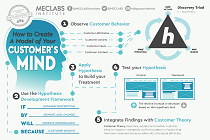
You need a repeatable methodology focused on building your organization’s customer wisdom throughout your campaigns and websites. This infographic can get you started.
Get the Infographic >Infographic: 21 Psychological Elements that Power Effective Web Design
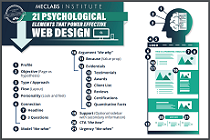
To build an effective page from scratch, you need to begin with the psychology of your customer. This infographic can get you started.
Get the Infographic >