|
SUMMARY:
How can you get AI to trust and cite your brand? The large language models that power artificial intelligence want concrete, consistent, readable facts they can quote without guessing. Providing this information on your website and in your content increases the odds your pages become the cited source in AI answers. Read on for three simple steps illustrated with real-world examples collected through MarketingSherpa’s business journalism. |
Action Box: Transparent Marketing, Part 2: How to earn the trust of a skeptical consumer…and machine
In the age of LLMs, this timeless principle is even more important to driving revenue. Join us for a free AI Guild session on Tuesday, October 13th at 2:00 pm EDT. Register now (from MECLABS AI, MarketingSherpa’s parent company).
Are your webpages filled with uncheckable superiority?
Words like best-in-class, leading provider, world-class platform, revolutionary approach, championship golf course, best-selling author, and on and on?
Technology companies and authors seem to all be from Lake Wobegon. I’ve never seen a middle-of-the-class software platform or average-selling author.
I refer to this type of copywriting as blandvertising. The words fill a copy block. At a quick read, they seem like the type of words that should be discussing this product. But if you use even one iota of skeptical thinking you realize…these words don’t tell you anything about the product at all.
They imply. They wink. They insinuate. But they don’t really give you any information.
As a business journalist, I get pitches with these types of claims every day and ask follow-up questions to get to the bottom of the real situation undergirding the hype. Well, truthfully, I just toss most of them. But, for the ones that do really seem to have something substantial going on and perhaps used inartful wording to try to express it and grab attention for it…I’ll ask those follow-up questions.
True, most of your prospects will not perform the same due diligence as a seasoned reporter.
But large language models (LLMs) sure will. Have you seen how big those data centers are? They need to spend that processing power on something.
So let’s take a look at each claim through that skeptical lens:
Go through your or your client’s website, and every time you find a claim like this, add information to answer questions like these. And if you can’t find the supporting info, excise the claim.
These phrases may persuade some humans. But they give an AI nothing it can safely quote.
Because if you want LLMs to cite you, they have to trust your company. The words on its website. And even the images.
As Flint McGlaughlin shared in a recent AI Guild session – The New Economics (And Philosophy) of Value in the AI Era – LLMs are trying to pierce brands’ influence tactics to determine what is true. Here, he describes an experiment he conducted giving an LLM three versions of a scientific paper, each with a different supporting image.
“It [the LLM] said the other two visual elements appear to imply additional scientific measurement. But the measurement doesn't match what's actually reported. They make the presentation more persuasive looking while making it less trustworthy,” explained Flint McGlaughlin, CEO, MeclabsAI (parent company of MarketingSherpa).
This isn’t new in the AI era. It’s what marketers have always done to a certain extent.
We called it brand police. Or value proposition discipline.
And it came out of a central tenet of human cognition: you have but a few moments of your ideal prospect’s attention in a noisy world…so be clear and consistent to build a clear image of your company in their brain.
Artificial intelligence is trying to parse all the information about your company in the same way, connecting knowledge across pages and websites to understand the who, what, where, etc.
It’s not that AI and humans can’t process ambiguity. They can. But it’s a chink in your armor when the decision is relative. If your competition is clearer, it gives them one leg up to being chosen.
So create a one-page internal reference that includes:
Then apply throughout your owned assets:
LLMs don’t only go to your website, of course. So do what you can to keep things consistent in the wild as well.
I heard an interesting perspective on this challenge from an AI Guild member. I was only seeting the negative in it – oof, if you’re an established company, especially if there have been mergers, acquisitions, or re-brandings, there could be a lot of variety out there for how your brand is being referenced throughout the internet and even on your owned properties. That’s a lot of cleaning to do.
But where I only saw the manure this AI Guild member found the pony – this means newer (usually smaller) brands have a leg up over their larger, more established competition. They can start out of the gate with entity consistency and not have to worry about all the accumulated gunk.
To get you thinking, here’s a simple example of some entity spring cleaning.
BEFORE
Some listings referred to the company as ‘King Co Work,’ while others used ‘King Work.’
AFTER
“We decided to fix the core information first, starting with the website and Google Business Profile, before working through the external directory listings,” said Bart Wolkowski, founder, King Work.
External listings now use consistent wording describing King Work as a boutique coworking and flexible workspace in Adelaide CBD (Central Business District), with virtual office, dedicated desk and meeting room services.
RESULTS
“We have seen King Work appear in Google's AI Overview for searches including ‘virtual office space Adelaide’ and ‘dedicated desk Adelaide,’” Wolkowski said. “We've also had several prospective customers tell us that they found King Work through Gemini.”
You can take all of that info you collated from Step #2 and publish a version of it as an AI information page on your website to help the LLMs understand your business. That’s a simple way to make content clear, explicit, and easy to understand.
For the rest of your website, make sure your content is machine consumable. After all, AI can’t cite what it can’t reliably read.
So make sure your content isn’t hidden due to:
heavy client-side rendering
accordions that don’t render in the DOM until clicked
blocked bots
scripts that delay meaningful content
infinite scroll without accessible pagination
Make all your content visible, especially author and date. AI systems tend to prefer attributable content.
This is a new level to consider when designing and implementing your website. For humans, we were always designing for conversion. Now we have to design for machine comprehension as well. Here’s an example.
BEFORE
Had a robots.txt file. The file allowed crawlers onto public areas of the site. AI crawlers weren’t blocked, but there was no specific policy for them.
Localized landing pages were generic. For example, ‘Ocala is a large and diverse Central Florida market. Apps2Grow helps local teams evaluate repeatable outreach workflows and search-ready website improvements for their business model.’
AFTER
The team added an llms.txt file – a plain-language document describing who they are, what they do, and their pricing so the LLMs didn’t have to guess based on the site’s marketing copy.
“The first version was too promotional, with claims that were hard to verify,” said Stuart Matthew Smith, marketing director, Apps2Grow.
He continued, “The current version is more factual: what each product does, what it costs, terms, where we operate, and where the supporting pages live. We removed stale prices, unsupported results, and language that made the products sound more autonomous than they are.”
On March 21, 2026, the team updated the site’s robots.txt file to explicitly allow LLM crawlers – GPTBot, ChatGPT-User, Claude-Web, Anthropic, and PerplexityBot. On July 11th, they expanded the allowlist to include Google-Extended, Meta's crawler, Applebot-Extended, and CCBot.
They added crawler-readable rendered HTML.
And they built out more specific localized landing pages. For example, ‘Ocala and Marion County bring together an established equestrian economy, the SR-200 retail and healthcare corridor, the historic downtown square, and a growing base of residents and service businesses.’
RESULTS
“Several of our local market pages now show up as the cited source in Google AI Overviews for local searches. Pages that used to just rank are now the actual quoted answer,” Smith said.
The team hadn’t established a baseline to benchmark the specific impact of these changes on the results, and they don’t yet track citations. But they were able to share their latest seven-day crawler report:
They were also able to share how the site improved in a technical audit.
“Before the crawler-rendering fix, our Ubersuggest crawl scored 63, found 103 issues, and flagged 77 pages for low word count because it was mostly receiving the JavaScript loading shell. After the fix: score moved to 78, pages successfully crawled went from 77 to 115, total issues fell from 103 to 71, and low-word-count pages dropped from 77 to 14,” Smith added.
This article was distributed through the free MarketingSherpa email newsletter.
Related resources
LLM Displacement Theory and the Importance of the Value Proposition
AI transparency
This is a human-conceived and -written article, assisted by AI. MECLABS AI was used to review source pitches for artificial intelligence usage, evaluate the credibility of potential sources, craft follow-up questions to sources, brainstorm the steps and advice in this article, create Open Graph and CMS thumbnail images, and provide copy-edit suggestions for the article.
Get Better Business Results With a Skillfully Applied Customer-first Marketing Strategy

The customer-first approach of MarketingSherpa’s agency services can help you build the most effective strategy to serve customers and improve results, and then implement it across every customer touchpoint.
Get More Info >MECLABS AI

Get headlines, value prop, competitive analysis, and more.
Use the AI for FREE (for now) >Marketer Vs Machine

Marketer Vs Machine: We need to train the marketer to train the machine.
Watch Now >Live, Interactive Event

Join Flint McGlaughlin for Design Your Offer on May 22nd at 1 pm ET. You’ll learn proven strategies that drive real business results.
Get Your Scholarship >Free Marketing Course

Become a Marketer-Philosopher: Create and optimize high-converting webpages (with this free online marketing course)
See Course >Project and Ideas Pitch Template

A free template to help you win approval for your proposed projects and campaigns
Get the Template >Six Quick CTA checklists
These CTA checklists are specifically designed for your team — something practical to hold up against your CTAs to help the time-pressed marketer quickly consider the customer psychology of your “asks” and how you can improve them.
Get the Checklists >Infographic: How to Create a Model of Your Customer’s Mind
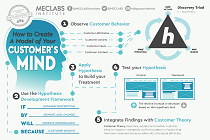
You need a repeatable methodology focused on building your organization’s customer wisdom throughout your campaigns and websites. This infographic can get you started.
Get the Infographic >Infographic: 21 Psychological Elements that Power Effective Web Design
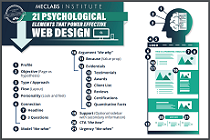
To build an effective page from scratch, you need to begin with the psychology of your customer. This infographic can get you started.
Get the Infographic >