|
SUMMARY:
AI can help you find patterns in customer research. But a pattern is not the same as an explanation. See how marketers and founders combine AI analysis with source evidence, human review, and direct conversations to understand what people mean…and decide what to do next. Read on for four tactics to help your AI-and-human collaboration. |
The Once and Future Landing Page, Part 2: Conversion optimization in the AI era
Join digital marketing pioneer Flint McGlaughlin for this live, interactive AI Guild session on Wednesday, December 2nd at 2:00 pm EST. Register for the free session now (from MECLABSai, MarketingSherpa’s parent company).
“There are many ways to summarize what customers say they want. I could input all my data, design a good prompt and Claude or ChatGPT could generate hundreds of brand promise ideas. I could provide input, revise the prompt and get more and more options. But most of them are obvious or expected ideas,” said John Lee, founder, Digital Growth Strategies.
I reached out to Lee after he posted in our AI Guild – “My big question right now: how do we use AI to get deeper customer insight without losing the human meaning that makes brands matter?”
Lee has had a 40-year career in the advertising and marketing industry, primarily working for agencies (The Richards Group, Temerlin McClain), but also dipping his toe in brand-side (Cheddar’s Scratch Kitchen).
And like many of us who spent a good bit of our lives in this industry, he’s wondering just what AI is capable of today. He used an example of a brand promise he created – ‘Always On’ – for North America’s largest integrator of mission-critical voice, security, and data solutions.
“This supports the reliability of their technology for mission-critical verticals like public safety and offshore oil exploration and it also supports and inspires their teams in that they, as employees, are always on for each other, their teams, clients and Motorola (the company is a Motorola channel partner),” he said.
“So there is a lot of nuance and double meaning that again, I don't think AI is there quite yet,” Lee told me.
It works both ways
While he doesn’t think it is there quite yet, Lee described AI as ‘immeasurably helpful’ in his positioning and messaging research.
To get the most out of AI, we must also ask – are we being immeasurably helpful to the artificial intelligence we team up with? Supplying customer evidence, context like the value proposition, and judgment?
I think that’s the real challenge for marketers and entrepreneurs right now (and what we’re currently working on retrofitting the AI Guild to help you with).
Because language that sounds empathetic without reflecting much understanding was a challenge even before AI. How many times has a human customer service agent given you a message that acknowledged your frustration, then offered something that made the frustration worse?
We have lost human meaning in many ways for many reasons over the years. Bureaucracy. Cost-cutting. Hubris. Consultant-speak. And on and on.
AI is the new challenge to that, of course. Along with the new opportunity.
Just as customer-first marketers have long confronted all of those challenges, so must we confront this one. We do it by wielding this powerful new tool – in other words, we wield it, it does not wield us.
Which gets back to Lee’s core questions of using AI without losing human meaning.
The challenge is not simply whether AI can generate a meaningful brand promise. It is whether we give it the evidence and context to find something useful…and know when to question its interpretation.
For that to happen right now, we’re all trying to figure out how the AI and the human team up.
To give you ideas for how to do that, the tactics and real-world examples below show how that division of labor could work.
AI can be helpful. It can also lead you and/or your ideal customers quietly astray.
One way to help compensate for that is the instructions you give to artificial intelligence. Just as multiple humans could derive multiple meanings from the same data, you want to encourage AI not to provide one canonical interpretation of truth.
Artificial intelligence can be very convincing and authoritative in how it responds, even when the underlying data does not support it. Or the AI is sometimes just flat-out wrong. This of course is not unique to AI, as anyone who has sat through a sales pitch from human vendors and consultants can tell you.
If you were sitting in the meeting with humans, you might ask for alternatives. Do the same with AI. For example, if you’re using AI to derive meaning from human comments, you could try a prompt like:
For each pattern, show the supporting source IDs and exact excerpts. Then offer alternative interpretations, evidence that challenges each interpretation, and a follow-up question that could help distinguish among them. Keep observations separate from hypotheses. Do not present an inferred emotion as an established fact.
Before unleashing AI internally or externally, you could also conduct an audit using your very human superpowers. Three things you could check for:
This same audit approach could also help you uncover opportunities where AI is losing human meaning, and your brand can step in to serve your ideal customer better. If we look at the next real-world example (DogSpots) through this audit lens, it would be:
Let’s take a look at the details, so this example can spur ideas in you for your brand.
The co-founders at DogSpots are an experienced duo. “We’ve built products at Google, Meta, Fitbit, Spotify and Perk, among others,” said Emily Gallagher, co-founder, DogSpots.
So they knew the importance of bringing the customer viewpoint into play early. “Before building anything, we tested [our idea] in December 2025 with a survey of 110 dog owners, recruited through local Facebook groups, Reddit, our own networks and QR stickers around Hackney, followed by in-depth interviews.”
They used AI to help process all the info they received. “We used Claude to help summarize and compare the interviews, but the insight about being ‘allowed’ versus ‘welcome’ came from owners themselves,” she said.
And ‘allowed’ versus ‘welcome’ was the key. They realized dog owners weren’t just looking for venues where it was permissible to bring a dog. These pet parents were looking for dog-friendly business establishments that truly welcomed owners with dogs.
The challenge was that this wasn’t a simple yes-no decision for business owners. There were times when they would love to have dog owners, and other (perhaps busier) times of the week when dogs weren’t as welcome. Also, the general AIs often weren’t gathering this info from the owners themselves, but often from online user reviews, which could have dated or inaccurate info.
Gallagher provided an example. “My friends had booked lunch at Booking Office 1869, and when I searched for it, Google's AI Overview told me definitively that dogs weren't allowed inside. The source behind that answer was a Tripadvisor review from 2014. Because the table was already booked, I called the venue before deciding whether we needed to change our plans, and they told me they love welcoming dogs. When we got there, we also found out things no search would have told us: there were water bowls out for dogs, and the one house rule was that dogs stay off the furniture.”
So Gallagher and her co-founder are using human legwork to get the nuanced information directly from business owners.
Creative Sample #1: App listing for venue that AI overview had said didn’t allow dogs
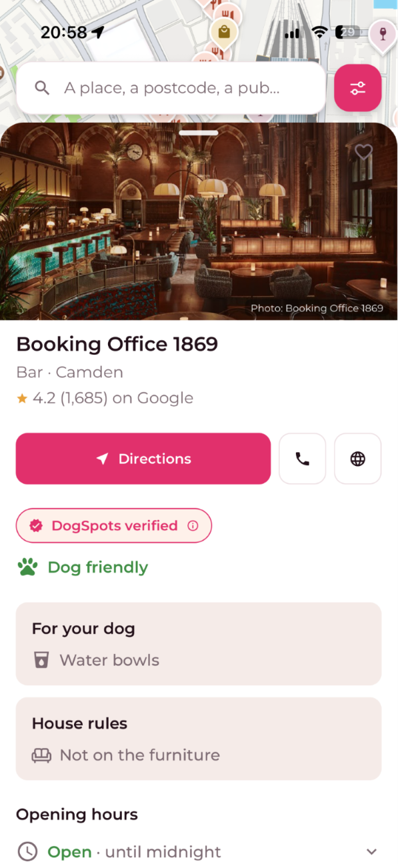
“Our UX background showed us that the problem wasn’t a lack of apps but a lack of reliable information, which is why we focused on building a database, not just an app,” she said.
AI then takes this info and makes it more discoverable – the app’s Scout AI curates roundups and day plans based on what users say they are interested in.
Creative Sample #2: AI-generated day plan in dog app, based on human-assisted database
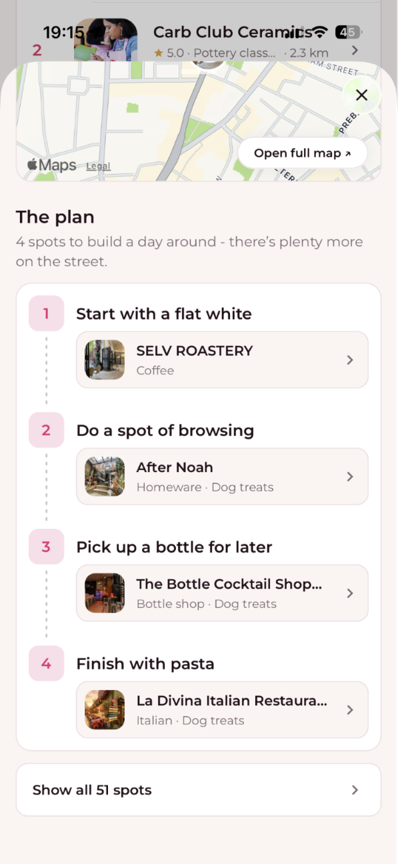
The one-time audit is a way for your team to use its human abilities to uncover places where the AI alone falls short.
You can try to fix that with more AI (secondary agents checking on the primary agent, refined prompting, etc.) And keep auditing until you get the desired results (with spot checks down the road).
Or you can ensure to have a human-in-the-loop at just the right point, as in our next example, where the team forces the AI to provide its evidence and has a human review it every time.
BEFORE
The PR agency pitched stories about a Series A B2B fintech by reading each reporter's last five to 10 pieces by hand. Then they would pitch the reporter with a message like the below, personalized for each reporter:
‘Hi [first name], [client], a fintech backed by [investors], just launched [product], which lets small businesses get paid on invoices in 24 hours instead of 60 days. Would you be open to a quick chat with the CEO?’
AFTER
In July 2026, they added artificial intelligence to the process.
“We pasted each reporter's articles from the last month into Claude with a three-line brief on the client's news and ask it to ‘summarize what this reporter keeps coming back to: recurring topics, questions she leaves open, who she quotes. Quote the passage behind every point. Don't suggest a pitch.’ (the last bit matters, otherwise it starts selling),” said Eitan Soloducho, managing partner, Edamame PR & Strategy.
For one reporter on a national business desk part of the output was ‘4 of her 6 recent pieces are about small businesses squeezed on cash flow. In 3 she quotes owners saying big clients pay late but gives no figures, and twice notes that hard data is scarce,’ and the line behind from an article the journalist wrote was ‘Owners say large clients are stretching payment terms, though hard data on how far is scarce.’
Previously, the team might have pitched this reporter about a launch, something she likely receives many pitches about. But thanks to this nugget uncovered by AI, the pitch became:
‘Hi [first name], you've mentioned twice this month that nobody has hard numbers on how late big companies pay small suppliers. [client] processes about 40,000 invoices a month and can share it: the average invoice now gets paid 23 days late, up from 16 a year ago, construction is the worst. Happy to send the breakdown, and the CEO can walk you through it if useful.’
Humans on the team check every summary against the actual articles before anyone writes anything, because it does get things wrong. In the same campaign, Claude told the team that another reporter was skeptical of fintech lenders, based on a line that was actually a quote from someone she interviewed, not her view.
RESULTS
In Q2 2026, the team made 240 pitches and got nine interested replies along with five declines.
In Q3 2026, they made 260 pitches and got 19 interested replies along with nine declines.
“We also tried letting it write the pitches and replies dropped, so humans write every one,” Soloducho said. “AI can read 50 reporters for me, it can't care about any of them, and reporters can tell.”
I talked about auditing AI’s outputs. But teaming up with artificial intelligence can work in reverse – AI can audit your team’s internal work as well.
This happens in big and small ways. Something as simple as getting feedback on an idea or creative concept. Or as big as AI keeping an eye on everything going on in your company, and flagging up opportunities and concerns. Like in our next example.
BEFORE
Client needs were evaluated by the humans closest to the account.
AFTER
A health score is calculated for every client by AI.
“AI is good at catching quiet patterns across many accounts,” said Joe LaGrutta, founder, JayOh.
AI can generate ideas for what’s causing those patterns, but in this use case, the company requires humans in the company to assign meaning.
“A Claude Project [is created] per client that remembers the account. Each one holds the engagement charter (goals, stakeholders, scope), call transcripts, a running work log of what shipped each sprint, and a decision log: what was decided, by whom, when and why,” he explained.
AI flags up patterns that might indicate problems or concerns in an account.
Here’s an example. “We were rebuilding quote-to-cash for a B2B SaaS client (Salesforce, Chargebee and PandaDoc). The plan was a full configurator covering new business, expansion and renewals, plus automated invoice links written back into Salesforce,” LaGrutta said.
Over a few weeks the signals shifted and AI flagged it up – a different leader began coming to calls, the client kept asking about getting new business live first.
AI thought it was a scope fight. After the assigned consultant asked the client ‘What has to be true for you to call this a win?’ it turned out business priorities had changed.
So the team quickly pivoted what they were building. “We caught the priority shift before the next sprint planning instead of a sprint or two later and cut a build the client didn’t want before we spent the hours on it,” he said.
Once you get those customer insights, you need to act on them. AI can help here as well, but this is another place you want to bring a human touch to protect your brand.
Artificial intelligence has been criticized for sucking the humanity out of creative works. What you get might appear technically sound, but there is often something flat about it. Or a little off. There are telling patterns (especially in writing) that will cause people-in-the-know to instantly discount or reject the work.
And that’s when everything works well. In the worst-case scenario it’s just slop.
But there is a way to keep the humanity and still get benefits of artificial intelligence.
Use AI behind-the-scenes to quickly and cheaply flesh out a concept. But then bring in humans when you get to the creative that touches a customer.
This isn’t necessarily new. Creatives have always used intermediate steps behind the scenes to flesh out an idea. Whether that’s a simple marker comp or a slickly produced storyboard. But what AI now makes possible is forcing clarity on an idea (especially between creatives and account execs, or the agency and the client) far quicker and cheaper than creatives ever could before.
Here’s a simple example from a creative industry – filmmaking.
“Killing Kyle Orth” is a documentary with a companion book.
“One place we used AI was to create an original song called ‘Gee Mister Meth.’ We used Suno and ChatGPT,” said Teeg Stouffer, founder, Fascination Film Studio. “But we didn’t want generative AI in the finished piece. We wanted a human performance of the song.”
So they used the AI tools to work out the tone and lyrics and music and then turned it over to humans to perform.
Across these examples, human nuance was key to protecting the brand and getting the most value from AI – ‘allowed’ versus ‘welcome’ dogs, a reporter’s view versus a source’s quote, a scope dispute versus a changed business priority.
The marketers and entrepreneurs who scale yet protect their brands today are using AI to identify the pattern, but then return to the evidence – and, when needed, deep human empathy – to understand it.
How are you teaming up with artificial intelligence? Join us in our free AI Guild, and share what you’ve learned or ask for advice about your challenges.
This article was distributed through the free MarketingSherpa email newsletter.
Related resources
The Once and Future Landing Page: Conversion optimization in the AI era (Part 1) – Video replay of AI Guild session, including slides and transcript
AI In Marketing: When AI gives buyers answers first, here’s how marketers win
Letter To The Editor: Audience analysis, blind spots, and human experience in the AI era
AI transparency
This is a human-conceived and -written article, assisted by AI. MECLABSai was used to review source pitches for artificial intelligence usage, evaluate the credibility of potential sources, craft follow-up questions to sources, brainstorm the steps and advice in this article, create Open Graph and CMS thumbnail images, and provide copy-edit suggestions for the article.
Get Better Business Results With a Skillfully Applied Customer-first Marketing Strategy

The customer-first approach of MarketingSherpa’s agency services can help you build the most effective strategy to serve customers and improve results, and then implement it across every customer touchpoint.
Get More Info >MECLABS AI

Get headlines, value prop, competitive analysis, and more.
Use the AI for FREE (for now) >Marketer Vs Machine

Marketer Vs Machine: We need to train the marketer to train the machine.
Watch Now >Live, Interactive Event

Join Flint McGlaughlin for Design Your Offer on May 22nd at 1 pm ET. You’ll learn proven strategies that drive real business results.
Get Your Scholarship >Free Marketing Course

Become a Marketer-Philosopher: Create and optimize high-converting webpages (with this free online marketing course)
See Course >Project and Ideas Pitch Template

A free template to help you win approval for your proposed projects and campaigns
Get the Template >Six Quick CTA checklists

These CTA checklists are specifically designed for your team — something practical to hold up against your CTAs to help the time-pressed marketer quickly consider the customer psychology of your “asks” and how you can improve them.
Get the Checklists >Infographic: How to Create a Model of Your Customer’s Mind
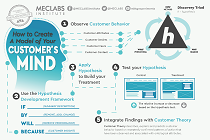
You need a repeatable methodology focused on building your organization’s customer wisdom throughout your campaigns and websites. This infographic can get you started.
Get the Infographic >Infographic: 21 Psychological Elements that Power Effective Web Design
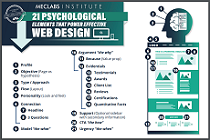
To build an effective page from scratch, you need to begin with the psychology of your customer. This infographic can get you started.
Get the Infographic >