|
SUMMARY:
Gain customer insights with customer research even if you engage in no A/B testing. Yes, A/B testing is a staple of modern marketing. But what if you don’t have the traffic, resources, or technical support to run statistically significant tests? Or maybe you just want to understand your customers on a deeper level – beyond the numbers. While A/B testing with a statistically valid sample size is the gold standard, you can get meaningful customer insights without running an A/B test. Here’s a step-by-step approach to uncover customer insights – no split test required. |
If you were running true marketing experiments, you would build your A/B tests based on a hypothesis.
Even without A/B tests, define exactly what you want to learn. This keeps your research focused and valuable.
Are you trying to understand why customers abandon your checkout process? Or maybe you want to know what’s holding prospects back from filling out your lead form? Work with your team to craft a learning objective so your discoveries are more likely to impact future decisions.
When crafting a learning objective, don’t only take what your stakeholders tell you at face value. Get curious. Dig a little. Discover the real request behind the stated request. Keeping asking ‘why?’ until you get to a root cause.
“As marketers, our stakeholders will sometimes come to us and want a thing. They'll come to us with a tactic like, ‘I want x, y, or z.’ And until you uncover what is behind the ask, then you won't ever get the [desired outcome]. If you just do what they ask for half the time, it's not going to deliver the outcome that they really wanted. And the outcome is what marketing is all about,” Thea Hayden, Interim CMO, Cognizant, told me in Integrated Marketing: Brands are built by how you show up every day (podcast episode #126).
Set up customer interviews. Ask open-ended questions. Listen more than you talk. You’ll be surprised by what you hear – motivations, objections, and even the words customers use to describe your product.
If you can, run a focus group. Or, if that’s not feasible, send out a survey with open-ended questions. The key is to let customers tell you, in their own words, what matters to them.
“The very core of what you learn as a marketer – certainly the core of what General Mills tells you as they're training you to be an effective marketer – is that you've got to speak to the consumer. You have to have conversations with them and understand – are they excited about this product? And then you take it to market, then you test it, but you've got to get some degree of just feedback from the customer to validate that they’re there before you put blood, sweat, tears, and muscle behind actually launching it,” Onaisa Landis, Vice President of Marketing, Octane, told me in Marketing: It’s not about you, and when you make it about you, you are never going to succeed (podcast episode #53).
Of course, General Mills is a massive company with customer research budgets to match. But don’t let your size stop you from learning from customers. Even if you’re a solopreneur, you can conduct customer research. Like in this example.
BEFORE
Debra Russell failed three times to launch a coaching program about time management and productivity.
AFTER
“I decided to dust off something I learned in my marketing class at CU-Boulder, Leeds School of Business – the empathy interview,” said Debra Russell, certified business coach, Debra Russell Coaching, LLC.
She put out a call to her ideal customers via her mailing list and social media and conducted 55 interviews. She asked questions like:
“I did the interviews on Zoom and used Zoom to record and transcribe the interviews. Then I stripped identifying information out of the transcripts and uploaded them to ChatGPT with a prompt to pull out their problem language, their solution language, etc,” Russell said.
RESULTS
“I discovered that while I knew what they needed – I didn't understand what they wanted!” she said. Russell learned she needed to help them solve their mindset issues around productivity (overwhelm, procrastination, prioritization, etc.) before guiding them into building and implementing systems and creating the habit to maintain those systems.
Based on these discoveries, she completely revamped her program, adding three additional pillars to the one she knows they need. She is now in the process of relaunching it, but she has run a few three-hour workshops with the new approach so far and gotten great feedback.
When talking to customers, be wary of the noisy outliers though – sometimes the squeakiest wheels do not represent your main set of customers.
One way to overcome getting lost in the outliers is building a customer simulator in AI, and interview it. Since AI naturally looks for the most common answers on a subject, this approach can help you avoid outliers. Plus, its available 24/7, has endless patience for your questions, and is much more affordable than a focus group.
In a best-case scenario you should use a simulated customer in addition to real customer conversations. The real conversations can help direct you on how to interact with the simulated customer and probe deeper.
But even in a vacuum, an AI customer simulator can help provide keen insights. For example, a psychiatric mental-health nurse practitioner requested group coaching from me on a SCORE webinar. One of her challenges was getting negative reviews.
To help determine what might be causing these negative reviews, I built a simple simulated customer in MeclabsAI (MarketingSherpa’s parent company) and asked it to go through the practitioner’s website and explain what the customer may be thinking, to uncover any disconnects with the actual service provided that might cause a negative review. You can see the result at 27:32 in the webinar replay – Get Unstuck: Live group coaching on your advertising and marketing messages (replay).
Your support team is on the front lines. They hear the good, the bad, and the confusing. Review chat logs, support tickets, and call transcripts. Look for recurring questions or complaints. These are often signals of friction or anxiety in your funnel.
There can be a lot of data, so it helps to have artificial intelligence analyze it.
And while we’re on the subject, analyze any conversations your customers have been having directly with your AI agents as well.
For example, MeclabsAI Agent Delivery System (MarketingSherpa’s parent company) regularly sends analyses of interactions with customers that include:
You can see an example of how this analysis was used in Step #5 of How to turn your professional expertise into a lead gen engine with AI.
You don’t need a test to see where people get stuck. Use heatmaps and session recordings to observe where users click, scroll, and hesitate. Analytics tools can show you where people drop off in your funnel.
While you won’t have the same level of confidence you would get from a statistically valid marketing experiment, some problems are big enough that just watching a few real sessions can uncover an issue you never considered.
In addition to viewing specific sessions, constantly review the metrics for your funnels and campaigns to identify any drop-offs and opportunities for optimization. This is another way of ‘watching’ your customers, like in our next examples.
BEFORE
The team at Datasonic offered AI-powered SEO audits to small business owners. And while they got audit requests, when the team reviewed their analytics they observed no-show rates of 60%.
AFTER
The team tried to reduce no-shows with reminder emails, calendar nudges, SMS, and sending the audit report as a PDF, but these tactics didn’t move the needle. They tried to email summaries, and that started to improve results, but the team was still unsatisfied with the no-show rates.
Then they got the idea to preview the value and human interaction of the free consultations with a video created just for the prospect. “We added a two-minute personalized Loom video previewing one insight from their audit, sent 24 hours before the call,” said Uri Abramson, founder, Datasonic.
The team pulled two or three key findings from the audit and recorded a short screen share walking through these findings. They said the business name, showed the actual website of the company and the report, and gave a taste of what else they could discuss on the call. It took a few minutes per lead and the goal was to make it feel very personal for the prospect.
The most effective videos highlighted something unexpected or specific. For example, showing a broken backlink from a high-authority site, or pointing out a competitor’s FAQ schema that they were missing.
RESULTS
No shows were cut in half. By showing tangible examples of the value that could be received in the free consultation, the team created a sense of reciprocity. Prospects told them, ‘You already did work for me, I should show up.’
“It flipped the mental frame from ‘free consultation’ to ‘someone did me a favor, now I’ll return it,’” he said.
The team at Brkthru analyzes real-world campaign data to get customer insights. “Investments may shift from Meta to Tiktok, or from interest-based targeting to lookalike modeling, based on campaign performance against key performance indicators,” said Karen Cuce, vice president of strategy, Brkthru.
BEFORE
For example, when the team ran a destination marketing campaign for a client, they analyzed data to try to understand traveler intent.
They considered variables like location, seasonality, daypart, inventory, audience segment, and creative performance.
They also reviewed frequent traveler data from first-party airline insights, past site visitors, engagement activity on social media, and contextual alignment with premium travel and lifestyle publishers.
Based on this continual data review, the team adjusted budgets, audience segments, and creative strategies to reflect seasonal travel trends.
AFTER
During peak travel months from fall through spring, the team increased investment and expanded tactics nationwide – with heavier emphasis on drive and fly markets near the destination, where travel intent is highest. In contrast, summer budgets were reduced and focused on nearby states to reflect lower visitation trends.
“We also diversified the channel mix by introducing Connected TV through Hulu domestically and expanding CTV into international markets, helping strengthen and sustain year-round visibility,” explained Karen Cuce.
RESULTS
These changes drove a 213% increase in attributed visitors and $1.6 billion in estimated annual visitor spend. The CTV campaign alone drove an additional $168 million in visitor spend and 178,000 incremental visits.
“Data partnerships (for example, with Adara, Sojern, Arrivalist, and TravelSpike) enable us to analyze traveler intent, visitation lift, and ROI. It allows us to connect impression-based awareness to measurable economic impact,” Cuce said.
I remember once back in the days of the bygone era of marketing, our ad agency’s president came into my office after he got back from a trip. He was at the airport, and the guy next to him was reading the newspaper and stopped on one of our ads. He told the guy, “Hey, I noticed you read that ad. It just so happens my agency created that ad. Would you mind sharing your thoughts?”
He was giddy telling me about the feedback, and I was equally giddy receiving it. Because back in those days, it was so rare to get such organic (not focus grouped) feedback out in the wild.
Fast forward to today. My gosh, how lucky are we as marketers and entrepreneurs? We get real, unvarnished feedback like that constantly as our prospective customers naturally talk about us on social media and in reviews.
“Reddit is incredible…I'm in there mixing it up with the customers. I'm reading, learning, understanding – what are the issues, what are the opportunities? I get in and add clarity where I can, but we start to see things there. You can start to see trends emerge in conversations people are having because everybody's very transparent. I'll get in and ask questions and we use that as direct input into shaping what we do future forward,” Aron North, chief marketing officer and commercial owner, Mint Mobile, told me in Not Enough Lobster In The Ocean: Trusting their gut leads to 90,000% revenue growth at Mint Mobile (Podcast Episode #11).
Customers are talking about your brand – sometimes to you, sometimes to the world. So make sure you’re reading product reviews, testimonials, and social media posts. What are the common themes? What objections come up again and again?
Pay attention to the language customers use. It can help you communicate more clearly and persuasively.
Be specific on how you are going to monitor to make sure your team operationalizes this approach. Here’s an example:
You can of course do this manually. Or you can use an AI-powered tool, like in our next example.
BEFORE
“When Pilot came to us, they had a lot of data but struggled to find specific, SKU-level insights from the noise of public reviews,” said Nitsana Bellehsen, head of brand and content, Revuze.
For example, the Pilot team saw negative reviews for a particular notebook and assumed the product was flawed.
AFTER
The team used the platform to filter the notebook feedback by retailer and SKU.
They also analyzed a new ink color and discovered a recurring theme: customers were complaining that the ink was ‘not perceived as dark enough.’ Pilot’s marketing was promoting it one way, but the customer's actual experience was different.
By analyzing sentiment across Pilot’s entire category, the platform also uncovered a strong, unmet customer desire. The data showed consumers were actively discussing and wishing for a ‘fancier’ version of a popular pen. This wasn't just a few random comments, but a statistically significant trend.
RESULTS
The platform identified that the negative sentiment about the notebook product was retailer-specific, not a universal product issue.
Pilot’s marketing team updated product descriptions and marketing copy on e-commerce pages to better meet consumer expectations about ink color. This simple change reduced negative reviews and improved satisfaction.
They also passed along the insight about customer desire for a fancier pen to the product innovation team which led the company to launch a more premium product offering.
“Social media allows you to see what is popular, trending (or simply hype),” Bellehsen said. “Product Reviews (from e-commerce sites), on the other hand, are the gold standard for understanding product performance and purchase drivers.”
At this point you’ve gained a lot of wisdom from the customer.
Now, pull it all together. Look for patterns across interviews, support tickets, analytics, and reviews. What are the big takeaways?
Put together ideas about what might improve the customer experience – even if you can’t test them right away.
Once you have those learnings together, collaborate with your internal and external teams. Encourage them to challenge these discoveries based on their experience. But push back as well on their assumptions to see if you can dive deeper into what you’ve learned already based on their unique viewpoint.
Above all, be curious (to help the customer) not defensive (of your own opinions).
Then, begin to understand the business impact of implementing changes to better serve the customer. For example, when Chad Brown had a marketing idea he wanted to implement at hotel check-in, he first socialized the idea with his colleagues in hotel operations. Here’s what he learned.
“It just opened my eyes. I thought, holy cow, I had what I thought was this spectacular marketing idea where we were going to create this program that was going to be such a benefit to the consumer. And I didn't realize these small changes in different operating areas could create a huge ripple effect across the resort,” Chad Brown, CMO, JC Hospitality, told me in Hospitality Marketing: Have a Gumby attitude to any launch (Podcast Episode #20).
He continued, “every program I launched since then, I think through not only what's the consumer experience, that's extremely important, but I think – what is the impact to the organization and how do I make sure I get the stakeholders involved to say, ‘Hey, guys, here's what I'm thinking. Does this work? Do you have a different idea or are there obstacles that I'm not aware of that you can tell me about.’”
Now that you have a better understanding of what the customer needs and how your company can address it, where/when in the customer journey will a change be most impactful?
Lay out the steps your customers take from first touch to final purchase. Where do they get confused? Where do they drop off? Where do they get excited?
A simple journey map can help you nail down exactly where and how you are going to improve the customer experience.
BEFORE
The All Filters team analyzed several data sources to better understand their ideal customer:
From September 1, 2023, to August 31, 2024, customers purchased 5,728 units of an OEM filter on All Filters.
Creative Sample: Previous landing page selling OEM products
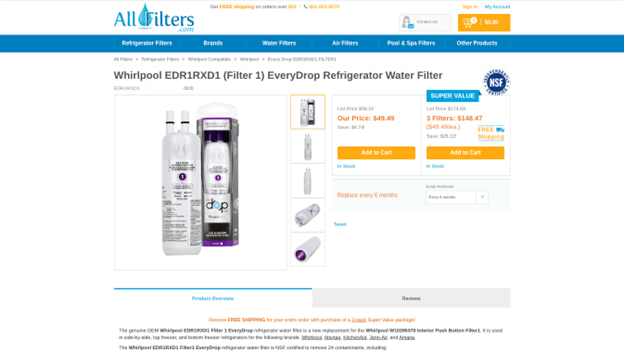
Based on this analysis of search data and customer behavior, the team hypothesized that demand existed because people were actively looking for specific filter models. But based on the bounce rates and lower conversion rates for certain models, they also hypothesized that customers didn’t see the price they were hoping for.
AFTER
These customer discoveries convinced the team to launch its own filter that could replace the OEM model, and they mapped those customer discoveries into a new customer journey they could build:
In October 2024, they launched their own filter and used the strategy of comparative landing pages.
Creative Sample: New landing page showing in-house brand compared to OEM model
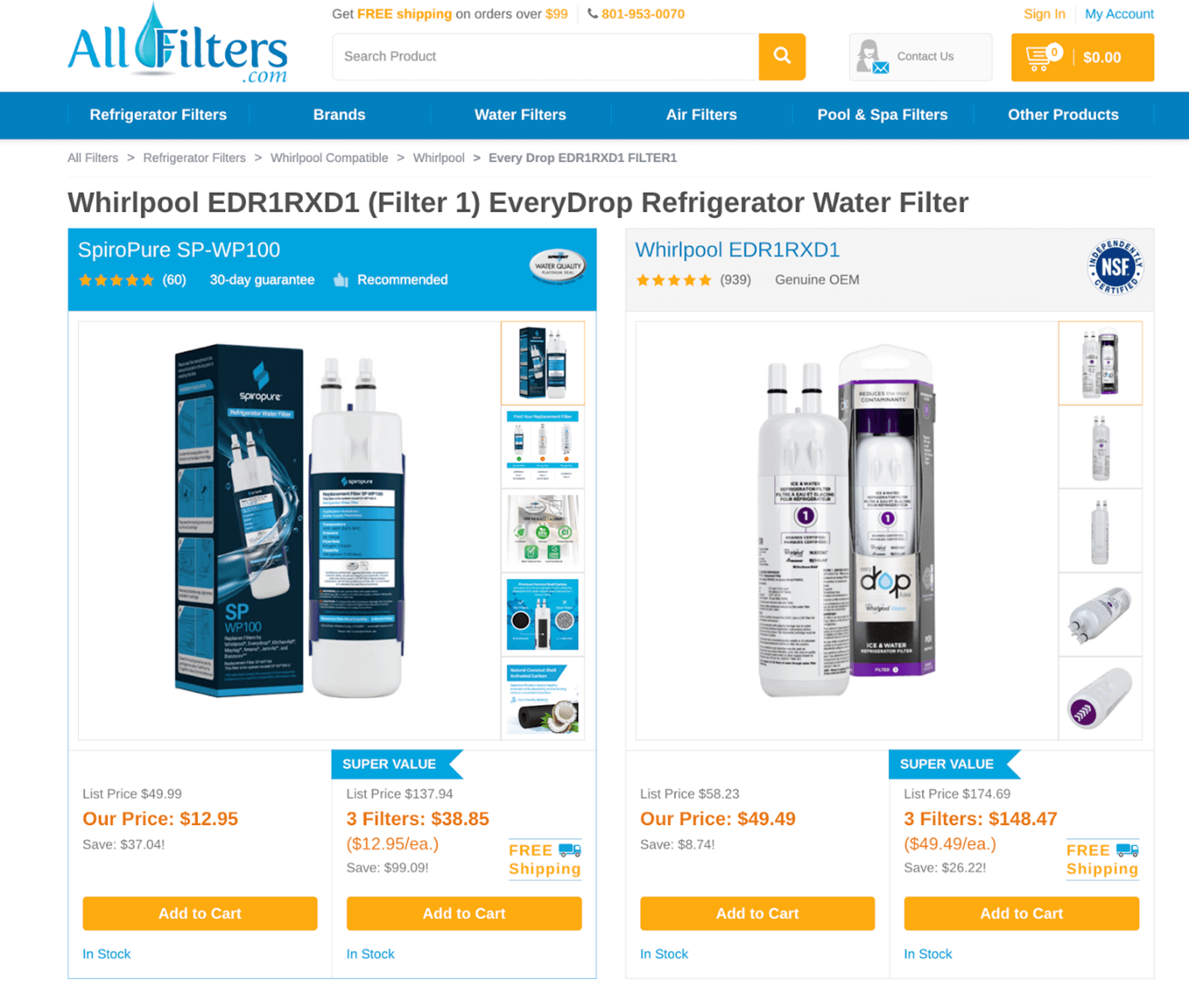
Rather than burying compatibility information in product descriptions or requiring customers to search through catalogs, the dedicated pages were optimized for the exact terms customers search for. This approach improved organic search visibility and shortened the customer journey from search to purchase.
RESULTS
Over the next year (through September 2025), they achieved the following results:
And of course, having an in-house brand delivered better margins for the company than simply being a retailer, generating 9x more profit per unit.
“This wasn't about testing different button colors or headline variations. It was about deeply understanding customer behavior through SEO data and search patterns, then building a solution that serves their actual needs: finding quality filtration at a fair price,” said Shu Saito, CEO and founder, All Filters.
The team at Cro Metrics discovers customer journeys with analytics deep dives. “[We] use GA4, Amplitude, heatmaps, and session recordings to see how users really behave,” said Melanie Buck, managing director of strategy, Cro Metrics. Here’s an example.
BEFORE
Dive Bomb Industries’ conversion rates dropped from 2.5% to 1.6% and paid-media ROAS was cut in half. With peak season approaching, they couldn’t wait for test results, they needed answers fast.
AFTER
“We ran a comprehensive Customer Journey Analysis combining GA4, Shopify, and Microsoft Clarity data with behavioral analysis, UX audits, and competitive benchmarking,” Buck explained.
The team discovered a data integrity gap – “A 35.6% discrepancy between GA4 and Shopify meant paid platforms were optimizing on bad data,” she explained.
By mapping the full customer experience from awareness to conversion so they could pinpoint drop-offs and friction, they also found:
“We diagnosed navigation friction by using Microsoft Clarity (client’s choice) to identify clusters of rage clicks and paired that with heatmaps and analytics to locate the exact drop-off points,” explained Gwen Hammes, CEO, Cro Metrics.
The team built a roadmap of site updates and paid media improvements to better serve the customer journey.
RESULTS
They fixed the brand keyword issue right away by restoring the two-word ‘Dive Bomb’ brand name, recovering $42,000 in revenue.
The larger roadmap is expected to have a multi-seven-figure annualized impact.
Now that you know what changes you could possibly make to improve the customer journey, take a good hard look in the mirror and realize – you can’t do them all at once.
So work with your team to prioritize.
After all, not all insights are created equal. Use a framework like the Meclabs Conversion Sequence heuristic to prioritize changes that address motivation, value, incentive, friction, and anxiety (MeclabsAI can help you). Start with the changes most likely to have an impact.
The data you collected in your different types of customer discovery work should also help you at this step. You should have not only learned ‘what’ to possibly change but gotten a sense of how impactful those changes could be.
“How are we prioritizing the most important things and how do we know they're the most important things? And I think that's where it combines with that second component, where you get those qualitative insights, but you have to match them with the quantitative,” Tara Robertson, Chief Marketing Officer, Bitly, told me in B2B Marketing: Marketing shouldn't be about driving demand; it's about driving value (podcast episode #40).
After you make changes, keep listening. Ask customers if the new experience works for them. Keep reviewing support tickets and feedback.
Customer insights aren’t a one-time project – they’re an ongoing conversation.
But don’t overlook feedback from internal employees and external stakeholders and vendors as well. Sometimes they can see something isn’t working…they just feel powerless to change it. So understanding how they view the customer experience, and also how they view their role and their ability to improve that experience, are vital.
“Most people don't feel comfortable, probably either because they're scared or they've had reason to be scared that they're going to get blowback from any type of feedback they provide. And so creating anonymous ways to collect that feedback for myself, but also for our broader organization is something we try and do,” Bryan Law, CMO, ZoomInfo, told me in B2B Marketing: You can accelerate your career by identifying areas you are willing to take risks that others are not (podcast episode #56).
Marketing Research: 5 examples of discovering what customers want
Get Better Business Results With a Skillfully Applied Customer-first Marketing Strategy

The customer-first approach of MarketingSherpa’s agency services can help you build the most effective strategy to serve customers and improve results, and then implement it across every customer touchpoint.
Get More Info >MECLABS AI

Get headlines, value prop, competitive analysis, and more.
Use the AI for FREE (for now) >Marketer Vs Machine

Marketer Vs Machine: We need to train the marketer to train the machine.
Watch Now >Live, Interactive Event

Join Flint McGlaughlin for Design Your Offer on May 22nd at 1 pm ET. You’ll learn proven strategies that drive real business results.
Get Your Scholarship >Free Marketing Course

Become a Marketer-Philosopher: Create and optimize high-converting webpages (with this free online marketing course)
See Course >Project and Ideas Pitch Template

A free template to help you win approval for your proposed projects and campaigns
Get the Template >Six Quick CTA checklists

These CTA checklists are specifically designed for your team — something practical to hold up against your CTAs to help the time-pressed marketer quickly consider the customer psychology of your “asks” and how you can improve them.
Get the Checklists >Infographic: How to Create a Model of Your Customer’s Mind
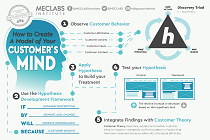
You need a repeatable methodology focused on building your organization’s customer wisdom throughout your campaigns and websites. This infographic can get you started.
Get the Infographic >Infographic: 21 Psychological Elements that Power Effective Web Design
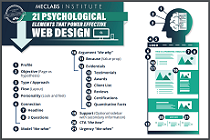
To build an effective page from scratch, you need to begin with the psychology of your customer. This infographic can get you started.
Get the Infographic >