|
SUMMARY:
The key to event marketing is to focus on attracting and serving a specific audience, make it easy and appealing for them to attend, and create real human connections and memorable experiences. Read on to get ideas for your own strategy from real-world B2B and B2C case studies. |
Action Box: Custom AI Agent Builder
Train a custom AI agent on your site's content in under 90 seconds. No cost or registration to try the AI Agent Builder (from MeclabsAI, MarketingSherpa’s parent company).
What is event marketing? It’s simply an attempt to gather people.
So start with the people.
Who can you serve in this event? And who can you attract? For example, I’ve been in endless meetings with companies big and small who sought to attract Fortune 500 C-suite executives. Some companies can serve (pull off an event that is helpful to this group) and attract (get them to show up). But for others, it’s obvious why they want this elite audience (cha-ching, they control the budgets). The get for the company was clear, the give to the attendee less so. And thus, no real chance to attract them.
When choosing your ideal customer profile (ICP), remember, business is trade-offs. The more niche you go and tightly target the audience you seek to serve, the bigger the draw will be for them…and the smaller your total universe of possible attendees.
For example, an Email Growth Marketing Strategy Conference could attract email marketing specialists, growth marketing specialists, and senior digital marketing strategists. While a Business Growth Strategy Conference could attract those same roles, but also business development representatives, corporate partnership officers, business operations leads, acquisition strategy managers, and a host of other business roles…up to and including CEOs.
While bigger always feels better (’10,000 attendees’ is a lot more fun to brag about than ‘100 attendees’), this is ultimately a strategic business decision centered around who your company wants to connect with. Sure, it would be nice to talk to all different sorts of business people (especially decision makers), if the core users of your product are email marketing managers, that may be the best place to start.
Like with any marketing – an event (or product) that serves everyone rarely serves or attracts anyone really well.
Here are some factors you may want to consider when crafting your ICP that will be invaluable for your copywriter, media buyer, and sales team:
Keep in mind, some events will have more than one ICP. If you’re also looking to attract speakers or sponsors, this exercise would be helpful for them.
The ICP process is a great opportunity to find gaps in your product offerings as well. If there is an ideal customer set you can attract to an event but don’t currently serve with a product, it’s an opportunity to test an offering…like in our next example.
In a previous role, David Carrison Hager was a mortgage broker for a local lender in Jacksonville. The lender did not have a physician loan program, and Hager saw an opportunity.
“Living in Jacksonville, this is one of the most desirable locations in the entire country for physicians. With the most competitive salaries, no state income tax, and most cutting-edge technology in the medical industry located at the Mayo Clinic and UF Health, Jacksonville is ranked as the 16th best city for doctors in the United States [according to St. John Associates Physician Recruiting],” said David Carrison Hager, mortgage loan officer and assistant vice president, Truist.
Notice how Hager describes the situation – he spots a real customer need and turns it into an opportunity. That’s what recognizing a genuine market gap looks like in action.
And since it was a local opportunity, an event was a natural way to tap into the opportunity. So the team created a wine-and-dine event on the first Thursday of every month and personally invited physicians and hospital residents. Attendance was intentionally limited and private to focus on the ideal customer.
The word ‘exclusive’ has been beaten to a pulp by advertising copywriters to the point where it has lost all meaning.
However, there is no better word I can use in this article to describe how you should build your campaign – exclude most people from your event. Your campaign should be tightly focused on its ICP…even more so than any other campaign you run because there is an opportunity cost.
You only want the people at your event who can most benefit from it and act on your intended offers. Every person eating a shrimp cocktail or even adding white noise to a Zoom chat that doesn’t fit that definition is an opportunity cost.
So like in the above physician example, make sure to tightly tailor your campaign. Here’s another example to get you thinking.
BEFORE
A fintech company received more than 400 registrations via paid LinkedIn ads, but only 12% show rates, and fewer than half were qualified prospects. Cost per qualified attendee was £340.
AFTER
Instead of casting a wide net, the team pitched three targeted stories to industry publications. “All trade publications and niche newsletters, not mainstream business press. Most marketers chase audience size and end up in outlets their ICP doesn't actually read,” explained Daniel Grainger, founder, Ranking Atlas (the fintech company’s PR agency).
The three pieces were:
The team focused on senior finance and treasury roles at mid-market companies in the UK and Western Europe, with a buying-trigger question on the registration form that flagged the specific operational exposure the product addresses.
Title, size, and trigger all had to hit for ‘qualified.’ “One person in marketing ops scored every registrant against the same rubric within 24 hours of registration, before any sales contact. Letting SDRs or AEs score introduces channel bias; they already have opinions about which sources produce good leads,” Grainger said.
RESULTS
These three placements generated only 89 registrations, but 78% attended and 91% were qualified prospects from the ideal customer profile. Cost per qualified attendee dropped to about 18% of the original cost. Two attendees entered the pipeline as warm first-touches and within six months became enterprise clients worth £180,000 ARR.
We use so many digital tools and channels and on-demand content in our marketing that it’s easy to overlook what truly makes events specials – it’s humans getting together with humans, at the same time, in the same (sometimes virtual) space.
Showing pictures from last year’s event (or the most recent webinar that shows interactions in chat) is a very basic way to leverage the human connection – maybe you had an official photographer at the event and have some great images assets or capture some great screenshots from the webinar.
But you can create a deeper connection if you show content created by previous attendees – their pictures, social media posts, write-ups, etc. If you have this content, don’t just share it on social media. Also include it right on the event landing page or microsite.
According to Matt Wurst, CMO, Genuin, user-generated content should be placed “inside the consumer's path of intent. On the product page. In the article. Not on a hashtag feed nobody visits.”
When crafting your marketing campaign, also consider who you can showcase from the current event. Here are some of the types of humans you can leverage in your marketing:
If attendees have a chance to connect with these people, make sure you clearly communicate that in your agenda. That value is an important part of the reason many people attend. The connection could happen at networking cocktails hours, club parties, special book-signing events, or like in our next example, intentional conversations.
The team at Belkins invites prospects deep in their funnel to small roundtable conversations.
“Before doing any promotion, we secure one or two strong names for the conversation. For example, someone from a company like Shell or General Electric, at a senior level,” said Michael Maximoff, co-founder and chief growth officer, Belkins. These are usually people his agency is already working with. Sometimes he secures them because there is a personal relationship, he offers special pricing, or there is a revenue share.
Maximoff then sends personal invitations as the host of the event, mentioning the key people who have agreed to participate, and keeps the events small – about 10 to 20 people – to foster interaction. He mentions the desire to hear their take on the topic as well. Here’s some example generic messaging:
John Smith, VP of Product from Boeing, and I are going to be discussing this topic, and we're inviting ten people in the product leadership teams from companies like yours. Would you spend time with us? We're really interested to get your take on the following topic.
He focuses on attendees with an annual contract value of $250,000 to $500,000 that have already had multiple touchpoints (usually 25 to 50) with his brand. He usually gets a 10% to 20% participation rate, which means he needs to identify 50 to 100 qualified guests to fill the roundtable.
Whether you have a free or paid event, there is a significant cost to attend your event.
For a virtual event, it might be an hour of their time. An hour away from pressing projects and needy clients.
For an in-person event, the cost goes up exponentially. Even more time out of the office or away from a favorite hobby. Additional time before and after the event for traveling. The cost of a flight and hotel room.
Are there ways to reduce that cost? They could be small – like asking for less information on the registration form. Or large. For example, when we hosted MarketingSherpa B2B Summits we were bi-coastal with an event in Boston and the same event a month later in San Francisco. That was harder work for us and our speakers, but it shortened the travel time and cost for attendees (not to mention, it gave us two local markets to pull from).
You can also use AI to help reduce costs, like in our next example.
The anxiety of choosing the wrong event, and the friction of getting the specific event info you want are mental costs your prospective attendees face.
To overcome legacy web limitations, the team at Reliability Web enhanced its event micro-site with the MeclabsAI Agent Delivery System, also known as an ADS (MeclabsAI is MarketingSherpa’s parent company).
Creative Sample #1: AI personal assistant for industry conference deployed through MeclabsAI ADS
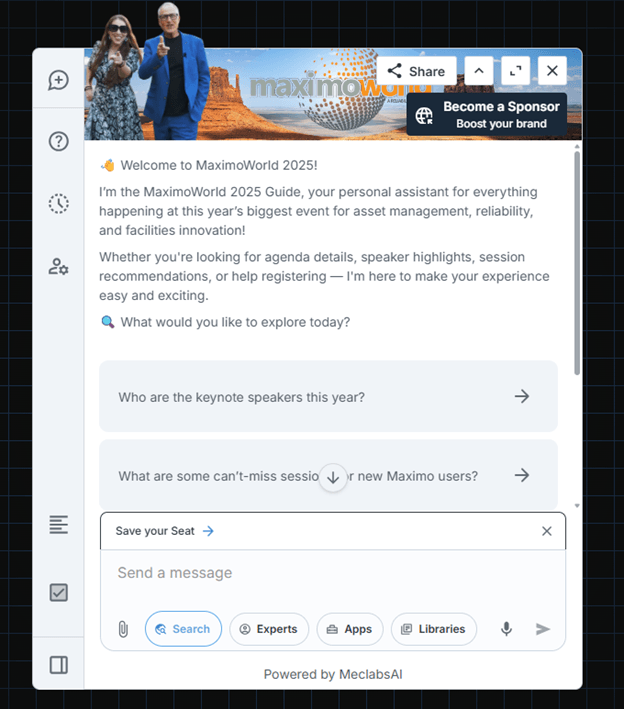
The ADS gave real-time answers to registrants’ questions with natural conversations. There was a goals planner app where prospective attendees could describe in one to two sentences what they want to learn, improve, or achieve at the event and it provided personalized speaker highlights and session insights.
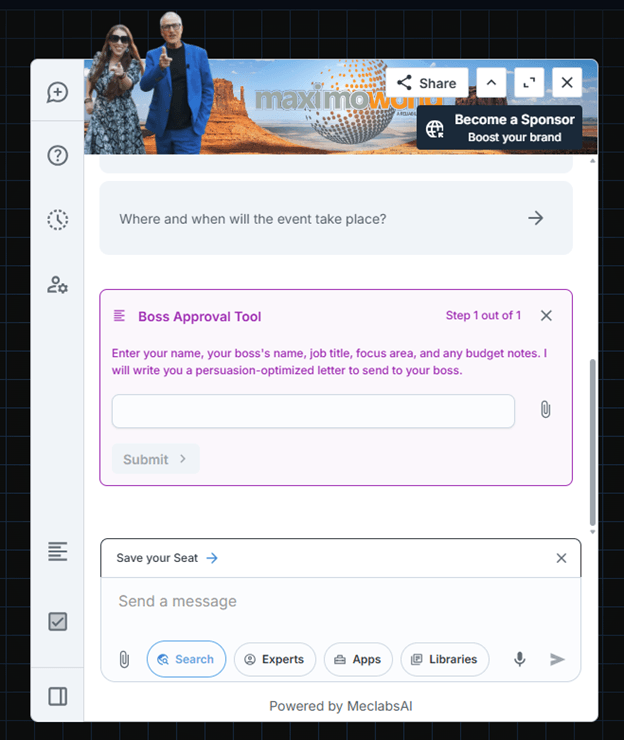
The ADS also helped overcome another cost for registrants – the friction and anxiety of having to ask a manager for the budget and time to attend a conference. The ADS had a custom app to write a manager-ready ROI justification…in other words, a boss approval letter.
Creative Sample #2: Boss approval tool in AI personal assistant
The ADS approach helped the team attract a measurable increase in event registrations.
Action Box: Custom AI Agent Builder
You can build a custom AI agent on your site's content in under 90 seconds, which can be deployed through an ADS, using the AI Agent Builder. No cost or registration required to get started (from MeclabsAI, MarketingSherpa’s parent company).
An event – even an industry conference – is kind of like a party you’re hosting. The more people you get involved in the party, the more they will want to help you get the word out.
So ask yourself:
Some examples to get you thinking:
You may already have many of these connections from your day-to-day business operations. But try to build new relationships as well – especially in the location where you’re holding your physical event.
“Don't just rely on online advertising and online ranking. Go out in your local community and strike up conversations with local businesses to see how you can collaborate,” suggested Aleksey Aronov, CEO, VIPs IV.
At this point if you’ve followed all of the steps, you’ve succeeded at attracting your ideal customer to your event. Huzzah!
Before I let you go, let’s not overlook what a unique and special opportunity your brand now has (likely the entire reason you’ve created an event in the first place) – you have the attention and presence of your ideal customer.
This isn’t in a channel, where there are hundreds of other ads running. And unlike just hearing about your product, they can now have an experience.
You can create amazing experiences at in-person events. For example, Dream Finders Homes built a fully furnished and functional home in the Jacksonville Jaguars’ EverBank Stadium. An ad flying by on a busy social media site does not have nearly the impact as a model home inside an NFL stadium on game day.
You can create experiences at virtual events as well. For example, at our AI Executive Labs, Flint McGlaughlin doesn’t just teach, he has a version of MeclabsAI that attendees use to build along with him. It’s not the full-featured version – that could overwhelm attendees new to the platform and it’s frankly a paid product. But it was a specially created version that had just enough to help attendees get value and create an experience for them.
Here’s a deeper look at a B2C and B2B example from a very on-the-nose industry – an event venue.
ERIA is a waterfront event space in Sausalito, California. Each qualified lead is worth approximately $40,000 to the company. Their most effective tactic is event marketing – where customers attend an event at their venue and then experience the venue incidentally in context.
One of their ideal customers sets is engaged couple. They often get invited to wedding showcases where they can tour a venue and meet partners as a way to go ‘shopping’ for vendors. To differentiate from the typical invitation, the team at ERIA offered practical value – an engagement cake decorating workshop. They produced the event in partnership with a cake decorator and promoter/DJ who specializes in paid social:
Fifty people attended. Three converted into qualified leads for wedding-related bookings. They are now planning future workshops on engagement shoot makeup and prenup planning.
To attract people interested in company retreats they hosted an event for female founders and industry leaders. “For corporate, we hosted a speaker series, ‘Legacy by ERIA,’ featuring Joan Barnes, Susan Griffin-Black, and Margaret O’Leary,” said Nikita Khandheria, founder, ERIA.
This event attracted 100 attendees, primarily senior corporate women. It generated four direct leads and additional downstream opportunities through internal referrals and follow-on programming.
“There is also a signaling effect. To attract clients planning $300,000 weddings or high-value corporate events, the programming and partners need to reflect that level. We prioritize working with top-tier talent, including well-known makeup artists and collaborators like celebrity Chef Ryan [Scott], so the audience self-selects into the right budget range,” Khandheria said.
Customer-First Marketing: How The Global Leadership Summit grew attendance by 16% to 400,000
Field Marketing Chart: Types of events that elicit the most branded photo social sharing
Content Marketing: How to host a virtual summit (in 9 steps)
Get Better Business Results With a Skillfully Applied Customer-first Marketing Strategy

The customer-first approach of MarketingSherpa’s agency services can help you build the most effective strategy to serve customers and improve results, and then implement it across every customer touchpoint.
Get More Info >MECLABS AI
Get headlines, value prop, competitive analysis, and more.
Use the AI for FREE (for now) >Marketer Vs Machine
Marketer Vs Machine: We need to train the marketer to train the machine.
Watch Now >Live, Interactive Event

Join Flint McGlaughlin for Design Your Offer on May 22nd at 1 pm ET. You’ll learn proven strategies that drive real business results.
Get Your Scholarship >Free Marketing Course
Become a Marketer-Philosopher: Create and optimize high-converting webpages (with this free online marketing course)
See Course >Project and Ideas Pitch Template
A free template to help you win approval for your proposed projects and campaigns
Get the Template >Six Quick CTA checklists
These CTA checklists are specifically designed for your team — something practical to hold up against your CTAs to help the time-pressed marketer quickly consider the customer psychology of your “asks” and how you can improve them.
Get the Checklists >Infographic: How to Create a Model of Your Customer’s Mind
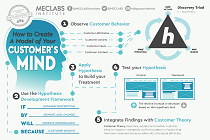
You need a repeatable methodology focused on building your organization’s customer wisdom throughout your campaigns and websites. This infographic can get you started.
Get the Infographic >Infographic: 21 Psychological Elements that Power Effective Web Design
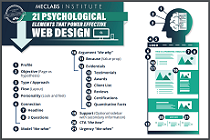
To build an effective page from scratch, you need to begin with the psychology of your customer. This infographic can get you started.
Get the Infographic >