|
SUMMARY:
How can an agency scale without sacrificing quality? When I interview agency leaders for the How I Made It In Marketing podcast, I’m always struck by a recurring theme: growth is exciting, but it’s also a crucible. The very things that make an agency successful at a small scale – personal attention, deep expertise, a culture of quality – are the first things threatened when the client roster starts to grow. So how do you scale without losing what made you great in the first place? We give you key pillars and action steps in this article based on real stories from your peers in the marketing agency world but also lessons we can learn from companies in other industries. |
Action Box: Click-simple AI workflow can help you do this
Automate busy work. Preserve your creative edge. See how in our step-by-step MeclabsAI workflow: Scale Without Sacrifice: 7 proven steps to grow your agency and keep every client happy (MeclabsAI is MarketingSherpa’s parent company).
Before you skip ahead to execute on your growth goal, really understand your motivations – why do you want your agency to grow? Some example reasons (along with their potential pitfalls):
Here’s an example of how to make sure growth doesn’t eat your agency, as told to me by Mary Church Cornette, CEO and head of creative, FUEL, in Creative Marketing Leadership: Strike a balance between management and production (podcast episode #138)…
“If you're not careful, you might fall into a vertical because it kind of snowballs. For example, we had this really big opportunity to rebrand a parts company and its children companies in manufacturing. And we thought, 'oh, this is such an amazing opportunity. This is great. We're going to have five brands in our portfolio.'
And it's great for our bottom line. We have a lot of opportunity to do some phenomenal work. A big, long runway.
Well then that sort of snowballed into additional manufacturing work and additional manufacturing work. And all of a sudden we're kind of specializing in manufacturing and go, 'whoa, wait wait wait wait wait wait. This wasn't necessarily the plan...’”
Now that you know some traps to avoid, there are many good reasons to grow your agency. Examples include:
By understanding what to say ‘no’ to (based on the previous pitfalls) you can say ‘yes’ to the opportunities that will help your agency sustainably grow. And sometimes, saying ‘no’ actually gets you to ‘yes,’ like in this next example.
“We were in the final stages of winning a really, really big client that was a public company…they kept coming back and asking for more and asking for more. And I finally got to the point I said, ‘No, we're done. This is what we can do.’ And they came back and signed a couple of days later. And that was really eye opening for me – sometimes in negotiations people need to hear ‘no’ so they know to stop asking,” Frank Weil, Founder & CEO, Myntr, told me in NFTs For Brands: It’s OK to say no, always be a student, don’t resist change (podcast episode #26).
The moral of the story – growth isn’t about more. It’s about more of the right things. So now let’s help you build and get more of the right things.
Your current value proposition got you to where you are today. And if it is a powerful value proposition and you keep executing for your customers, that value prop will probably help you grow at a reasonable pace.
But ‘scale’ implies big and rapid growth. Unless you have a capital infusion to invest in getting the current value prop in front of more ideal prospects, you need to change something about your value proposition to achieve that fast growth.
A clear, well-articulated value prop will not only help you scale, but it will also help with the second promise in this article’s headline – ‘without sacrificing quality.’ Because you will have a clear promise to your new customers and know what you must deliver to fulfill that promise.
That new value prop will probably be grounded in the credibility you’ve already built up as an agency but offer new exclusivity and appeal to help you get more and bigger customers. Here’s an example from outside the agency world that you can learn from.
Whitney Hill, co-founder of Snap ADU, shared on the How I Made It In Marketing podcast how her company scaled to $15 million in 18 months. The secret? Moving from a generic construction company to only focusing on accessory dwelling units (ADUs) to create a more exclusive and appealing value prop.
This new value proposition meant the team didn’t just say ‘yes’ to every construction opportunity that came their way but had the discipline to say ‘no’ to business that didn’t fit their new ideal customer profile (as discussed in Step #1).
Here’s an excerpt from Scaling to a $15 million company in 18 months by transparently serving an ideal customer (and saying “no” to other business) – Podcast Episode #1 so you can read Hill describe it in her own words:
“In the beginning, we were quoting absolutely everything that walked in the door. And our sales rep was going out to take a look at the property, walk through and trying to fit a square peg into a round hole. And we finally decided, you know, let's start stripping away the stuff that is time-consuming to bid, that we can’t consistently quote for the client, that we can't give a reliable cost out of the gate on, so over time we hold our focus on solely building detached accessory dwelling units.
Why? They are new construction which means it’s much more predictable, so then we are just really having to pin down the site variables for the client. And like I mentioned with the utility mapping we are able to do, the other remote assessments of topography, and the grading lines, we are able to nail that part with a reasonable degree of accuracy as well. So, by honing our focus on this very narrow set of accessory dwelling units, we are able to serve that user much better. And so, we are able to be very competitive for those kinds of units.”
I don’t have space in this article to outline everything involved in crafting your value prop, so here are two MeclabsAI workflows that can help – Is your value prop (really) strong enough? and How to create offers customers can’t resist (MeclabsAI is the parent company of MarketingSherpa).
Now that you understand why you want to scale (Step #1) and how you will get that new business (Step #2), the rest of the article is focused on making sure you do it while keeping the high quality of your work.
After all, growth exposes weak spots. The weakest links in your chain will break if you’re growing quickly. With enough pressure, even some of the stronger links will buckle as well.
So map out your key delivery steps and consider what’s needed to meet your new goal. The rest of this article will get into the nitty gritty of it.
Let’s be honest – documenting processes isn’t the reason most of us got into marketing. But as you scale, it’s the only way to ensure that what worked for your first five clients still works for client number 50.
Process documentation helps you identify gaps you need to fill as you grow. For example, if you as the founder used to write everything, there wasn’t a need for an internal review. But now that you’ve hired your first (and second and third) copywriters, you may need to wear the creative director hat and review the work more than executing it personally.
While creative work can be wildly variable, it’s still worth taking the time to standardize your core services. What are the steps that must happen every time, for every client? While one campaign may involve building a cutting-edge custom AI and another might be a traditional newspaper ad, there still be some necessary standard practices to ensure quality – outlining the process-level value prop, ideal customer, CTA(s), etc.
Another commonality – feedback loops should apply to every campaign and project you work on. Internal reviews, client check-ins, and post-mortems are how you make sure you’re creating on-strategy work (reviews by account executives), work that is up to the standards of your agency (reviews by creative directors), and small issues don’t become big problems (reviews by proofreaders).
You’ll probably want a detailed, master process plan and flowchart. But from that, you can create simple cheat sheets for your current team and onboarding new employees, like a process checklist and process pitfalls to watch out for.
When optimizing your process – be flexible, especially if you’re in a small agency. Title isn’t everything. And hiring a person with a specialized skillset isn’t your only option to fill a process gap. For example, I was working for a small ad agency and spelled a client’s brand name wrong in an expensive printed brochure (I felt like the face palm emoji before it even existed).
Did we have a process in place to avoid this? We sure did. We knew that while Quark Xpress called out misspellings, it wouldn’t properly recognize many brand names, and we would ignore those squiggly red lines. So, me and the other writer would proofread each other’s work.
This mistake made us realize the flaw. Sometimes the piece would go through so many rounds of edits, the ‘off’ writer (the one who hadn’t written the piece) no longer had fresh eyes. That’s how mistakes slip through.
So how was the mistake caught (fortunately before it ever got to the client)? My art director opened the first box at the reception desk and showed off the high-quality work of the just-printed batch. The receptionist noticed the typo instantly.
I realized, even though she wasn’t an officially trained writer, she had a vital asset – fresh eyes. So, she agreed to become part of the process even though it wasn’t part of her official duties and give each printed piece or print ad a final read through for us.
Don’t let job title (especially in a smaller agency) get in the way of continuously optimizing your process. And remember, it should be a living document – constantly updated, never done – that’s how you keep the quality of your work high, even as the team grows and changes.
Once you have the process in place, you’ll get a better understanding of who needs to know what and when. This is where communication comes into play, like in our next example.
BEFORE
Many years ago, the Skaggs Creative team relied on emails and spreadsheets to manage their processes and communicate.
“Email is great for communication, but not for collaboration,” says Jonina Skaggs, co-founder and art director, Skaggs Creative. “By moving project management into structured systems, our team stays organized, deadlines are visible, and clients can follow progress without confusion.”
AFTER
They now use technology that centralizes communication and has been customized around their process. “Primarily, we use Basecamp and custom-built CODA documents to manage projects,” says Bradley Skaggs, co-founder and creative director, Skaggs Creative.
The team likes Basecamp better than email since everyone on the team is notified of updates and the conversations are threaded. If a client or new team member sends an email, they’ll copy it to Basecamp and reply from there so a thread starts. If anyone emails back to that notification from Basecamp, it will be added to the right thread automatically.
They also store written meeting recaps in Basecamp. The recaps always start with: ‘The following is a recap of our meeting this morning. Feel free to comment below on anything we may have missed or misunderstood.’
“The CODA documents are more internal, allowing us to create dynamic database-driven documents that go far beyond Google Docs and Sheets,” he said. They’ve built documents to track product development costs and timelines for packaging products. For example, they have a document that tracks the following info for pdocuts:
Updating the unit cost in the packaging document updates it in this product document, keeping everything in sync.
RESULTS
“Structure is what allows for the flexibility for creative work since you are able to spend more time doing the creative work (the fun stuff) and less management (the boring stuff),” he explained.
The team didn’t have numbers to share like we do in a traditional MarketingSherpa case study, because this isn’t about a campaign or test. But here’s a word from a client about how the centralized communication has helped the working relationship – “The team remains professional yet approachable, dedicating countless hours to internalizing our vision and meticulously considering every detail,” said Sean Cavenaugh, CEO, and Sean Colbert, nose/creative director, both of Buchart Colbert.
Now that you have a firm understanding of your current process, and any shifts you might need to make to help scale while maintaining quality, what gaps have you found?
As mentioned in my previous example of asking a receptionist to pinch hit as a proofreader, not every gap requires a new full-time hire. But if you are growing, there is only so far you can go with your current team.
Here’s where your process work comes in – scaling isn’t just about hiring more people. It’s about hiring the right people…
…and then giving them the tools and training to succeed. Communication is crucial as you grow, so your work in the previous step on centralizing communication will pay off as head count increases.
Onboarding matters as well. A structured onboarding program can be the difference between a new hire who flounders and one who flourishes.
And don’t overlook culture as a key element of quality control. While you’ve identified the gaps you need to fill – in other words, what your team doesn’t have (or simply needs more of) to get there from here – the right skillset is only part of what you need from the right hire. Make sure you’re hiring someone who aligns with your company’s culture. When your team believes in the mission – and knows what ‘good’ looks like – they can help each other and hold each other accountable.
That culture should be reinforced in peer or annual reviews, company meetings and retreats and ongoing education. For example, every agency should train their team on emerging technology. But what is your company’s viewpoint of that new tech based on your culture? And how do you expect it to be used in your process?
While I’ve focused mostly on new hires for scaling, growth can come from your current team as well. Yes, sometimes it’s necessary to bring in a new hire with a skillset your firm doesn’t currently have. But promoting a current employee into a new role may have more benefits than simply bringing in new skills. For one, you already know if there is that crucial culture fit. And skills can be taught to a person with the right raw aptitude. But also, if the new hire backfills a current role, the onboarding will be more effective since you still have the person who previously had that role to ensure a smooth transition.
Lastly, as you grow you need to take a good hard look at that org chart, and how you assign work to teams. Here’s an example.
BEFORE
In his previous role, Milos Eric said he initially made the mistake of scaling a digital agency team by hiring too fast without clarity of process. The team ended up delivering additional work, but slowly losing some of the consistency clients had relied on.
AFTER
So, Eric switched from an output-oriented focus to an ownership focus. Instead of adding layers of management, Eric gave smaller, cross-functional teams – usually about four people but sometimes just two – clear ownership and creative space and accountability.
Eric felt this small team structure was small enough to have shared accountability, but big enough to share thinking and skills. Typically, the teams consisted of:
To facilitate the change, the agency offered workshops on decision-making, client communications, and quality standards. They also held peer-led, weekly reviews where peers offered constructive feedback.
RESULTS
The firm measured reductions in revisions, reductions in QA, and reduced delays in delivery. Within four months, these quality metrics improved by 40% and client satisfaction (measured in surveys) increased from 7.8 to 9.2. Clients mentioned how there was better communication and more polished drafts.
“Start small. Pilot the ownership model with one team, collect the results and then roll it out. If you're planning to overhaul the team structure in one day, that's too much stress,” advised Milos Eric, general manager, OysterLink.
Now that you know what you’re going to get done and how you’re going to do it, make sure your team has the tools they need to get it done.
For example, let’s say you’re bringing video editing in-house as part of your growth plan. A video editor may need significantly different technology than your art directors and graphic designers – a more powerful computer, more storage space, and different software.
As the centralizing communication case study in Step #4 showed, when your team grows communications needs change. You don’t want to rely on sticky notes and memory when you have offices on multiple continents.
And as part of the process breakdown, you likely identified areas for automating routine tasks like reporting, scheduling, and even parts of client communication. Giving your current team more time focused on strategy and creativity might even push back how quickly you need new hires.
Since growth can’t happen without growth – i.e., more clients – consider how tech fits into your funnel and the client acquisition process as well.
We can’t talk about technology in the year 2026 without addressing the elephant in the room – artificial intelligence. There is AI specifically designed to help growth agencies, like MeclabsAI among others.
The most powerful results come from blending these AI capabilities with human judgment and intuition. Human oversight ensures that:
Keep your team involved not just to oversight AI, but to actively shape, coach, and challenge its outputs. AI should be your amplifier, not your replacement.
Here’s an example of how one agency has used technology to power growth.
BEFORE
GrowthExpertz celebrated its ten-year anniversary on January 1, 2026. Originally, the team relied on referrals and ads to grow.
AFTER
Six months ago, the team pivoted to a more inbound-focused strategy, enabled by AI.
First, they started daily organic posting on LinkedIn. The team’s goal is to create educational, authentic, non-promotional content about startup growth. And they spend $500 a month boosting the top-performing content to their target audience of startup founders, investors, and marketing leads. “LinkedIn Sales Navigator gives me ability to search and build very targeted lists,” said Andrew Lee Miller, CEO, GrowthExpertz.
They also spend about 15 minutes a day engaging on other people’s posts – following relevant hashtags, joining conversations, and leaving thoughtful comments where they feel they can add value, and sending direct messages as well. “A guy named Ned Arick that I used to work with said it best ‘every no gets me super excited because I know I am one step closer to a yes, it’s a fact of life.’ So I just focus on helping people and being valuable and the rest I don't worry about,” Miller said.
Technology – specifically, an AI notetaker – has helped make this new strategy of content creation possible by enabling the team to quickly repurpose legacy content for social media.
“I hack this by using a tool called Sembly which records my calls and gives me transcripts that I then upload into a custom GPT that I trained on my [writing] voice by uploading my book into ChatGPT,” explained Miller.
The team then tells the custom GPT to create valuable social media posts based on what Miller taught startup clients in the past on these marketing strategy calls, reviews the posts, and schedules them a week in advance. They focused on giving away as much value as possible with a few CTAs to book calls, DM, and get in touch sprinkled throughout the week – a mix Miller described as 70% education/30% salesy.
Technology hasn’t only been crucial in production, but for discovery as well. “Instead of trying to rank for keywords on Google, we’re creating conversational Q&A content that’s designed to be found and cited by tools like ChatGPT, Grok, and Perplexity,” he said.
To help its generative engine optimization (GEO – think SEO for AI), they’ve produced question-based blog posts and articles around topics startup founders are actively asking AI, like:
RESULTS
LinkedIn impressions doubled in the first two months.
Six months ago, 90 percent of the agency’s leads came from referrals or ads. “Today, 70 percent come in inbound through LinkedIn and GEO,” Miller said.
Monthly inbound inquiries are up more than 200 percent, and cost per acquisition has dropped by roughly two-thirds.
Just this month, they’ve received five leads from GEO, and Miller will hire a full-time junior marketer to focus on GEO. Miller did caution that the team’s GEO work is still in its early days, and they have noticed that these leads tend to be lower quality and many are based outside the USA.
He also advised agencies to make sure they have a solid SEO foundation before focusing on GEO. “First focus on finalizing your marketing foundation, meaning the speed and usability of your website, your SEO standing, which you can quickly check and audit on SEOptimer (a free tool I do not own or get paid to mention). Fix all of that,” he said.
I’m sure you know the story of Icarus. He flew too close to the sun…and well, the Greeks gave us a cautionary tale for advertising and marketing agencies that grow fast.
Because if your agency is scaling fast, here’s what else is happening – you’re feeling pretty darn good, right? ‘I’m king of the veterinary marketing world!’ ‘Look on my works in sustainable eco-conscious branding, ye Mighty, and despair!’
So, your biggest threat may not be the competition, it may be your own hubris.
I’ve seen quickly growing agencies go poof in the night. Because growth, while so appealing, is darn hard. And once you grow fast, you’re expected to grow even faster the next year, or next quarter…even if you’re not public or investor funded.
So, you make tradeoffs to keep growing. “The risk, of course, is that you can make short-term decisions to force some of that excruciating growth. What does that even mean? Deeper discounting. Things like that…and we talked a little earlier about recruiting high growth requires high achievers and a lot of heart and hustle and fortitude to do it,” Pete Housley, CMO, Unbounce, told me in Marketing: High growth can be excruciating (podcast episode #64).
So, you hire someone with big agency experience and the leadership skills you’re lacking…and look the other way when they’re not a cultural fit. Or you take on a huge client to keep revenue heading up…even though they’re expecting high-volume, low-quality work.
And then before you know it, your agency has jumped the shark. And you don’t realize this until it’s too late – the employees who helped get you here start leaving, or your best clients find another agency.
That’s why you need an early warning system. The agencies that maintain quality at scale are relentless about tracking the right metrics – client satisfaction, project timelines, error rates – and using that data to drive improvement or make strategic course corrections.
Here are some examples to give you ideas for your agency’s own quality control as your team scales.
Not only can tracking these metrics help you course correct your agency, it helps with client communication as well. Here’s an example.
Chris M. Walker scaled SuperstarSEO Agency, to multiple seven figures while maintaining a client satisfaction rate of 98 percent.
The team created a shared dashboard clients could view in real-time. The main KPIs included:
While real-time transparency is an effective way to build trust in your work, it is not without its challenges. Some clients misinterpreted normal short-term fluctuations as problems.
To fix this, the team created a short onboarding walkthrough explaining what each indicator measures, what normal variation looks like, and which metrics matter most and when.
Since this section is specifically about quality control, I want to call your attention to the audit pass rate metric.
“We used a mix of internal Legiit tools and external platforms including Audiit, Snapt, internal on-page validators, link profile analyzers, and keyword movement monitors. These allowed us to cross-check campaign accuracy from multiple angles,” explained Chris M. Walker, founder, SuperstarSEO and Legiit.
While metrics transparency can help with client communication and retention, Jonathan Geller cautions against playing up vanity metrics.
“In one client’s account, we discovered 72% of Meta spend was hitting repeat customers despite strong LTV,” explained Geller, founder and CEO, Lower Cross.
Redirecting that budget into new prospecting campaigns doubled the client’s new customer acquisition rate in under 30 days.
Metrics can be recorded and tracked in the four walls of your agency, but there is something to be said for having real human interactions with your clients’ customers as well, to better understand and learn from them. Here’s an example.
Atlas Experiences grew 6,000% in three years, to $10.1 million in revenue last year, according to Inc. magazine. It is #33 on the magazine’s list of fastest-growing private companies in the US. The niche agency designs experience-based prizes for state lotteries and brands.
The team surveys all customers at the completion of an event about:
They also conduct impromptu interviews at events to hear about the most impactful elements of the event in the customers’ own words. For example, they learned about the impact of celebrity participation.
“The exclusivity of having a private show with country superstar Luke Combs added an additional element of wonder to this experience. Winners expressed sincere gratitude for the unique opportunity, and what it meant to them. This type of experience resonates with winners, and led us to doing the ‘Lady Luck’ event with Martina McBride,” explained Derek Gwaltney, founder and CEO, Atlas Experiences.
And they track participation. “One woman was the winner of a $500k cash prize in a Dollywood (Pigeon Forge, TN) experience in August 2025,” Gwaltney said. Two months later, she attended a similar promotion in Arizona. The decision to participate in another experience so soon after the initial one that was quite a distance away gave the team an understanding of the deep engagement fostered by that promotion.
- Step #1: Plan with intention
- Step #2: Sharpen your value proposition
- Step #3: Bridge your process gaps
- Step #4: Standardize communication
- Step #5: Fill people gaps (and build culture)
- Step #6: Adopt the right tech (automate, don’t replace)
- Step #7: Monitor with real-time quality controls
Product Quality: Marketing's job is to help the product win (podcast episode #97)
Strategic Delegation: Time is your most precious asset (podcast episode #96)
Get Better Business Results With a Skillfully Applied Customer-first Marketing Strategy

The customer-first approach of MarketingSherpa’s agency services can help you build the most effective strategy to serve customers and improve results, and then implement it across every customer touchpoint.
Get More Info >MECLABS AI

Get headlines, value prop, competitive analysis, and more.
Use the AI for FREE (for now) >Marketer Vs Machine

Marketer Vs Machine: We need to train the marketer to train the machine.
Watch Now >Live, Interactive Event

Join Flint McGlaughlin for Design Your Offer on May 22nd at 1 pm ET. You’ll learn proven strategies that drive real business results.
Get Your Scholarship >Free Marketing Course

Become a Marketer-Philosopher: Create and optimize high-converting webpages (with this free online marketing course)
See Course >Project and Ideas Pitch Template

A free template to help you win approval for your proposed projects and campaigns
Get the Template >Six Quick CTA checklists

These CTA checklists are specifically designed for your team — something practical to hold up against your CTAs to help the time-pressed marketer quickly consider the customer psychology of your “asks” and how you can improve them.
Get the Checklists >Infographic: How to Create a Model of Your Customer’s Mind
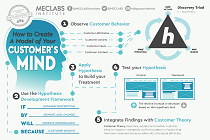
You need a repeatable methodology focused on building your organization’s customer wisdom throughout your campaigns and websites. This infographic can get you started.
Get the Infographic >Infographic: 21 Psychological Elements that Power Effective Web Design
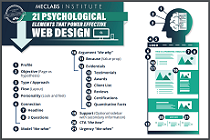
To build an effective page from scratch, you need to begin with the psychology of your customer. This infographic can get you started.
Get the Infographic >