|
SUMMARY:
What should we remove – from our website, our process, and our content – so more prospects become customers? Remove anything that creates drag. Marketing drag slows understanding, increases doubt, or delays response at the moment the prospect is ready to move. So prune technical bloat that hurts trust, internal process that slows response time when leads raise their hand, and non-exclusive content that doesn’t differentiate you. Your goal is to make the buying journey clearer, faster, and more convincing. Read on for real-world examples collected through MarketingSherpa’s business journalism. |
Action Box: Transparent Marketing, Part 2: How to earn the trust of a skeptical machine
In the age of LLMs, this timeless principle is even more important to driving revenue. Join us for a free AI Guild session on Tuesday, October 13th at 2:00 pm EDT. Register now (from MECLABS AI, MarketingSherpa’s parent company).
Unlike a brochure, a website is a living, breathing organism.
You constantly need to add to it to succeed. The latest tools. New code. Updated information.
But when adding the latest and greatest, you also need to keep a sharp eye on what can be removed. A website collects barnacles the way a ship does: small, seemingly harmless additions attach over time – both customer-facing and behind-the-scenes – until they add friction that creates drag.
As Antoine de Saint-Exupéry said, "It seems that perfection is attained, not when there is nothing more to add, but when there is nothing more to take away."
Because there will always be more to add. Especially for marketers and entrepreneurs, since technology changes so rapidly. Just like oversized should pads or low-rise jeans, a site that never gets updated sends a signal to prospects that your product or service is likely not up-to-date either.
So of couse, add to it. Add new content and new persuasion devices. But also view your site with the skeptical eye of elimination. Find opportunities to remove anything that increase friction, anxiety, or message confusion – for humans or machines. Because that reduces trust.
Here’s an example.
BEFORE
For FAQ pages, the team at a review site originally added extra FAQ schema beyond what appeared on the page to try to get more traffic.
AFTER
To make the site more trustworthy, the team ran an AI-assisted site audit on August 9th and found 18 pages with schema bloat.
For his worst page – ‘Are Robot Vacuums Worth It in 2026?’ – the schema included eight questions and answers that were not visible on the page. The team kept the schema the same, and added that Q & A to the published page. So the cut wasn’t fewer questions per se, it was removing the disconnect between markup and what a visitor could actually see.
Most pages didn’t have quite as big of a disconnect though. Usually, the visible FAQ was a paraphrased version of the longer schema text.
After cleaning up the site, the team now runs an automated check to make sure schema reflects what’s actually on new pages before manually publishing. “Before every content push to git, a small agent (Claude Haiku) literally checks ‘does this change touch schema, links, or indexing’,” said Michal Profeld, founder, RoboVacGuide..
This new approach did not create a lift Profeld can isolate yet – but it removed a clear compliance risk. “Google's guidelines say that markup content has to be visible on the page, so it is good that I now have a check for it,” he said.
The first cut is a removal of something that was originally in place by design. You can think of this next cut as a trimming something that is inefficient by default.
Every customer goes on a journey before they decide the best option. The pace of that journey is mostly in prospects’ hands. They often have a lot going on in their lives outside this one purchase decision, and that causes inertia. Many companies invest in marketing to try get things moving – ‘act now,’ ‘limited time only.’
But there are key moments in the customer journey where the brand has entire control over the timing – when the customer raises their hand.
How quickly does your brand respond when this happens? At many companies, that number has been arrived at by default. It’s based on internal company operations, not arrived at from a conversion-driven mindset.
So map out that customer journey. Indicate every place the duration of action is in your company’s hands. Understand the internal process. And then devise ways to speed it up for the prospect.
Because you don’t only lose prospects when they get distracted and move on to other things. The buyer journey is a dress rehearsal for how your company will respond when they are actually customers and something goes wrong. Speed signals competence and care. Silence inflames risk.
Here’s an example of reducing wait time.
BEFORE
Generator Supercenter ran ads during active power outages in the Pittsburgh area.
“The leads came in through two doors, a form on the campaign landing page and a Meta lead form built into the Facebook and Instagram ads, so a homeowner could raise their hand without leaving the feed,” said Eric Wenning, CEO, Wenning Branding (Generator Supercenter’s agency).
Follow-up was manual.
AFTER
“We moved intake into LeadLeaf and automated the first response so a new lead gets an immediate reply and drops into a trackable pipeline for the sales team, instead of sitting in an inbox while the homeowner calls the next company,” Wenning said (Wenning is founder of LeadLeaf).
RESULTS
Wenning attributes $362,500 in pipeline from 29 opportunities to this change.
Sometimes you get a lift by removing something that is hurting your performance in some way.
But other times you get a lift because the thing you removed allows you to do something more effective. Let’s face it, everything in business is a tradeoff.
When choosing what to remove, look to your brand’s value proposition. Focus on exclusivity. As John C. Maxwell taught, “People don’t pay for average.”
I don’t want to oversimplify, though. There is one important caveat. Table stakes are essential but not exclusive. Your customer needs them in order to choose your product, but doesn’t choose your product because of them. To use a simple example, wheels on a car are not exclusive. But a car manufacturer can’t stop putting wheels on cars (until they invest the hover conversion, at least). Wheels are table stakes to the car buyer.
Also, the amount of resources at your disposal will affect the importance of this cut. If you have few resources, focusing on the exclusive can make or break your company. If you have plenty of resources, you often have the luxury to do many things that aren’t exclusive.
Like our next example. A massive company with a huge budget could focus on the most highly motivated leads with exclusive content along with less motivated leads that it seeks to educate along the way with general content.
But in this example, the company didn’t have that luxury. So they stopped spending human time on answers already abundant online and focused resources on serving the most highly motivated prospects.
BEFORE
The team produced top-of-the-funnel (TOFU) basic educational and informational content, like:
AFTER
The team stopped TOFU content with general information. According to Alex Chaidaroglou, director, Altosight, their litmus test was “if an AI can answer it well from ten existing sources and cite them, we don't write it.”
The team now focuses on bottom-of-the-funnel content for prospects choosing between vendors. For example, ‘10 Best Prisync Competitors & Alternatives for 2026.’
“These are pages only we could write,” he said. “We know exactly how we compare with each competitor, what prospects ask us, what they like and what they don't, and we can be honest about it: if a competitor serves a specific market or need better than we do, the comparison page says so. Same on the feature pages: how we actually do MAP monitoring and enforcement and where that differs from how others do it. An AI can summarize the category. It can't have that.”
RESULTS
Every inbound lead from the past two months met both Marketing’s ICP criteria and Sales’ readiness threshold.
Start cutting this week
Pick one cut and do it this week: audit hidden markup, respond to hand-raisers in under five minutes, stop plans for a new non-exclusive page and replace it with a comparison asset, or cut something else to better serve your ideal customers. Then share what you learned from that cut in the AI Guild to get more ideas for performance-boosting cuts from your peers.
This article was distributed through the free MarketingSherpa email newsletter.
Related resources
Call to Action Strategy: This marketer changed three words to improve conversion by 300%
Heuristic Cheat Sheet: 10 methods for improving your marketing
AI transparency
This is a human-conceived and -written article, assisted by AI. MECLABS AI was used to review source pitches for artificial intelligence usage, evaluate the credibility of potential sources, craft follow-up questions to sources, brainstorm the steps and advice in this article, create Open Graph and CMS thumbnail images, and provide copy-edit suggestions for the article.
Get Better Business Results With a Skillfully Applied Customer-first Marketing Strategy

The customer-first approach of MarketingSherpa’s agency services can help you build the most effective strategy to serve customers and improve results, and then implement it across every customer touchpoint.
Get More Info >MECLABS AI

Get headlines, value prop, competitive analysis, and more.
Use the AI for FREE (for now) >Marketer Vs Machine

Marketer Vs Machine: We need to train the marketer to train the machine.
Watch Now >Live, Interactive Event

Join Flint McGlaughlin for Design Your Offer on May 22nd at 1 pm ET. You’ll learn proven strategies that drive real business results.
Get Your Scholarship >Free Marketing Course

Become a Marketer-Philosopher: Create and optimize high-converting webpages (with this free online marketing course)
See Course >Project and Ideas Pitch Template

A free template to help you win approval for your proposed projects and campaigns
Get the Template >Six Quick CTA checklists

These CTA checklists are specifically designed for your team — something practical to hold up against your CTAs to help the time-pressed marketer quickly consider the customer psychology of your “asks” and how you can improve them.
Get the Checklists >Infographic: How to Create a Model of Your Customer’s Mind
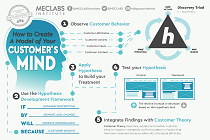
You need a repeatable methodology focused on building your organization’s customer wisdom throughout your campaigns and websites. This infographic can get you started.
Get the Infographic >Infographic: 21 Psychological Elements that Power Effective Web Design

To build an effective page from scratch, you need to begin with the psychology of your customer. This infographic can get you started.
Get the Infographic >