|
SUMMARY:
How can your business compete with the big AI platforms? Solve customer problems in ways general AI can’t – using your own data, personalized help, and human experience. Get ideas for how to do that at your brand from the real-world examples in this MarketingSherpa article. |
The Once and Future Landing Page: Conversion optimization in the AI era
Join digital marketing pioneer Flint McGlaughlin for this live, interactive AI Guild session on Wednesday, November 4th at 2:00 pm EST. Register for the session (from MECLABSai, MarketingSherpa’s parent company).
Something our audience has taught me over the years is that you don’t just turn to MarketingSherpa for information…marketers and entrepreneurs are also looking for inspiration.
When you read a case study, yes, seeing the real-world example does help spark your own ideas. But it also shows you a peer has done it. It’s possible.
Today, I see many marketers and entrepreneurs need that inspiration (and information) to go up against the large language models.
It can feel like they’re stealing your traffic. They’re stealing your customer’s time. And they want to be the ‘everything app’ taking all their money as well.
In times like this, take a deep breath and remember we’ve been here before. Fifteen years ago I wrote Consumer Marketing: All that stands between you and Walmart is a good story when retailers worried Amazon and Walmart would divide the ecommerce world and leave nothing for them.
Yes, Walmart is inching up to a trillion-dollar valuation. And yes, Jeff Bezos has the funds to shoot rockets into space. But there’s still plenty of pie left for scores of e-retailers large and small.
It’s not a perfect analogy. Most marketers and entrepreneurs are not trying to beat the LLMs the way they have to beat Amazon or Walmart to win a sale.
But the feeling is the same for many small- and medium-sized businesses. Do the goliaths get to determine our fate? Or can we steer our own ship?
So let’s roll up our sleeves, put on our customer-first thinking caps, and dive into these lessons and examples that give you the information and inspiration to help a specific customer accomplish something a general-purpose model, on its own, cannot...
This first approach applies to every other approach in this article.
Back in my copywriter ad agency days, all my concepts started with a pen and piece of paper. Feet up in my art director’s office. Flipping through a magazine read by the ideal customer. Batting around ideas.
We’d ultimately work these up to marker comps. Pitch them internally. Beat them up. And settle on a few key concepts.
And then…and only then…did we bring in the technology.
Back then it was QuarkXPress. Today it’s often artificial intelligence. But the same principle holds. Technology is a means to an end…never the end in itself.
In Help, Don’t Hype: A guide to customer-first marketing, I asked marketers to take off their marketing hat and put on their customer hat. Apply that same thinking before building an AI experience. What is the customer trying to accomplish? Where are they getting stuck? Start there – not with what you want the AI to say about your company.
You’ll find it often boils down to one of three things:
Here’s one reason customers would go to your company instead of a general LLM – you have access to information to help them that LLMs don’t.
This has always been true through human (phone, email, in-person, etc.) customer service or self-serve platforms.
But now you can also create custom AI agents to help customers. So they get the same interactive experience they would with an LLM, but answers to specific questions to help them move forward.
I’ll use MECLABSai as an example since I’m most familiar with it (MECLABSai is the parent company of MarketingSherpa).
For example, you could build a custom AI-powered expert and give it access to your CRM or ERP through MCP servers (MCP stands for model context protocol, and is a way to connect an AI agent to tools and information outside the model). You could then put that AI agent on your website and hook it up to your phone system to actually talk to customers.
Then, customers could use your AI to answer their questions about billing, their account manager, payment history, different plans, etc. A general-purpose model does not have this information by default.
This isn’t unique to MECLABSai only, of course. Here’s another example.
BEFORE
A barbershop with two locations took every booking by phone. The barbers were busy cutting hair, so they either had to let calls go unanswered or interrupt a haircut.
AFTER
“We moved bookings to WhatsApp, where an AI agent answers every message, day or night,” said Francisco D'Eça, co-founder, Sakuzo AI (the barbershop’s agency).
It books by text from the shop's real calendar, follows the shop's rules for each barber and service, and when the agent can’t handle something, it then gives the shop’s phone number.
It can book anytime day or night. “The agent books into a shared calendar app, Teamup, where each barber has a column,” D'Eça explained.
But humans can still book as well. Any barber can add a walk-in to their own calendar by hand.
RESULTS
After-hours bookings keep growing.
The previous step discussed using AI’s interactive, natural language layer on top of systems that already exist.
But sometimes the information your ideal customer wants takes more complexity than pulling from an existing system. This is an opportunity to build domain-specific AI from proprietary operational data.
Like in our next quick case study. As we’ve written about before on MarketingSherpa, including transparent pricing on your website can help with your brand’s AEO/GEO and get it discovered in a general LLM response. However, the LLM can only provide a generic response for many complex purchases.
For example, it may be able to provide an hourly range and a list of factors for private jet travel. That’s helpful, but not bookable. So this company built an AI-powered pricing engine.
BEFORE
The FAA-certified operator had been flying since 1995, and over that time the process remained unchanged. Getting a price required a phone call and then waiting for a quote.
AFTER
The team launched Ruby, an AI pricing engine, built on 30 years of its proprietary flight itinerary data. It accounts for positioning, routing, airport compatibility, fuel, crew and event-driven demand.
Now the ideal customer can go into the private aviation operator’s app and get a real, bookable price for the actual route and date, by aircraft class, in seconds. And then work with a human to book the flight.
Creative Sample #1: Elevate Jet app interface
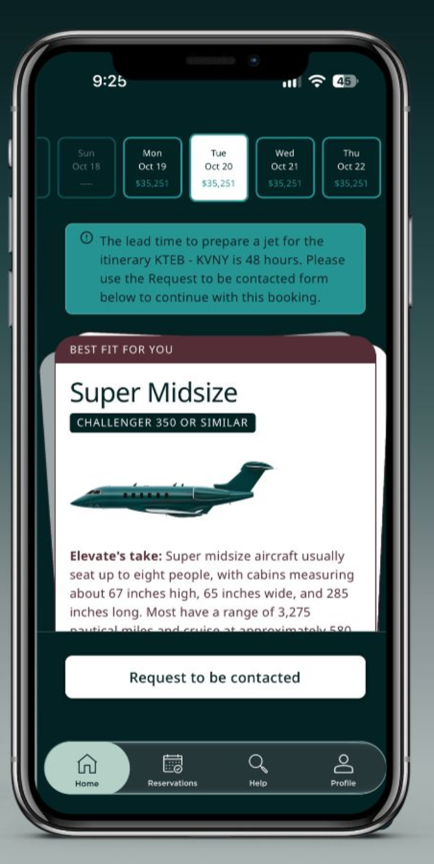
“A general answer stops at the price range. Ours has to get the trip right,” said Rawan Haroun, chief marketing officer, Elevate Jet.
RESULTS
From February 23 through September 15, 2026, 88% of people who booked on the app became repeat users of the app.
“The app just took a Robb Report Best of the Best 2026 award for Best App in Aviation,” Haroun said.
Up to this point, we’ve discussed fighting fire with fire. Using the underlying AI technology to produce more personalized, custom responses by using expertise and information that the LLM doesn’t have access to.
So let’s talk about something else the LLM can’t access with its trillions of dollars of investments that even the smallest solopreneur is brimming with – humanity.
In a recent AI Guild session (Roundtable Discussion: What human skills should you hone for the AI era?), I talked about another earth-shaking technological innovation – the camera. It could have put all painters out of business.
And yet, the last time I found myself in an art museum (shout out to the Yale University Art Gallery), I saw Rothko and Lichtenstein and so many more.
Because there are many skills the painter has that the camera didn’t necessarily replicate. For example, portraitists.
In a pre-camera example, the most famous painting of George Washington was by Gilbert Stuart. And it wasn’t necessarily because of Stuart’s skill with a brush.
“In order to put his subjects at ease and capture their personalities, Stuart liked to involve them in conversation. Washington was apparently not easy to engage while posing, which he found torturous, but the story goes that when Stuart hit on the topic of horses, the president perked up,” Diane M. Bolz explained in Moment magazine.
Once the camera came along, some portraitists could use that get-the-best-out-of-a-fellow-human skill with the new technology, or with the old technology. Either way, they had a skill that the new technology – the camera – didn’t destroy.
To fast forward to the age of AI, here’s an example using another get-the-best-out-of-a-fellow-human skill – interviewing.
BEFORE
A client was using AI to write their LinkedIn content by prompting a general LLM, editing the output, and then posting.
“Most of the client's posts were observations about news in their industry. They were accurate, but sterile. Anyone could have written them, and a general LLM did,” said Justin Nassiri, CEO/founder, Executive Presence.
AFTER
The team kept the current events analysis but aimed it at what the ideal customer cares about.
And they injected the client's personal history into the posts. They got this info by interviewing the clients and probing for details and stories.
“That humanizes them, and it gives them credibility through experience nobody else has. That is the part a general LLM cannot do. It has no idea what the executive has lived through unless someone asks,” Nassiri explained.
There isn’t always a straight line between the info from the interview and what gets written in the post, because the way executives actually sound and the way they aspire to sound doesn’t always match.
“For some clients the phrase match is very high. The way they talk to us in an interview is the conversational tone they want on LinkedIn. For other clients the match is significantly lower, on purpose, because we are helping them sound better or different than they actually sound,” he said.
RESULTS
In September 2026, the team published five posts for this client. They averaged 17,948 impressions, against 5,537 for the three previous posts from July and August. Three of the five beat the client's previous best of 11,261. The top post reached 35,990.
And the posts reached more of the ideal prospect. For example, the team measured the audience on one of the current events posts four days after it went live. The client's number one target job title was the top job title among viewers, at about 1,000 views, which is roughly 10 times their previous best. Core target roles made up about 12% of the audience, up from a ceiling of about 6%.
In an article about moving beyond generic AI, I have to talk about approaches for the artificial intelligence we use as marketers and entrepreneurs as well…not just customer-facing usage. The same principle applies behind the scenes – generic inputs and goals can produce results that look successful without helping the business.
To move beyond generic AI, you need to feed the machines the right context and the right goal. As Gideon Lewis-Kraus wrote in The New Yorker, “If you employed a robot to keep your house clean of dog hair, you wanted to be certain that it would vacuum the couch, not kill the dog.”
When AI is helping to build, an important way to provide context is by supplying your brand’s value proposition.
When AI is helping to buy, provide the right goal – which often means the primary objective that most benefits your business, as you can see in our next example.
BEFORE
The ad campaign treated a lead as equally valuable regardless of what service or market produced it. The system largely saw leads and calls.
AFTER
The team started correlating gross profit from each job – revenue minus direct technician labor and parts, before overhead – with things like service category, market/location, search intent and campaign.
“That allowed us to see something the ad platform could not show us from lead data alone: some parts of the account were producing plenty of conversions but poor economics, while other areas that did not necessarily have the cheapest CPL were producing much more profitable work,” explained Roy Danino, co-founder, Lachi Media.
They changed budget to focus on the most profitable individual markets and service categories. Now the AI could see completed jobs and their economic value, and the campaigns were organized around the markets and services where those outcomes occurred.
“Instead of asking Google to find more people likely to call, we could increasingly tell it which clicks had resulted in completed jobs and what those jobs were actually worth,” Danino said. “That is the part I think matters most in the AI discussion. The machine is very good at optimizing toward the objective you give it.”
RESULTS
The business was generating $700,000 in monthly gross profit
Six months after the change, monthly gross profit grew to $1.5 million while ad spend was down 34%. Within two years, monthly gross profit grew to $3 million.
“AI and automated bidding can optimize incredibly well, but they cannot decide for a business what success should mean,” he said. “If you tell the machine that every lead is equally valuable, it will become very efficient at finding leads. Human judgment is recognizing that a $5,000 repair and a low-value service call should not be teaching the algorithm the same lesson.”
Now go and do
You don’t need to compete with AI on everything it knows. Start with one thing your customer needs that an LLM cannot deliver on its own.
Identify the missing information, capability, or human judgment. Then build around that gap.
This article was distributed through the free MarketingSherpa email newsletter.
Related resources
AI In Marketing: When AI gives buyers answers first, here’s how marketers win
User-Centric Conversion Optimization: 3 before & after B2B marketing examples with metrics
How to communicate ‘why us’ without hype
AI transparency
This is a human-conceived and -written article, assisted by AI. MECLABSai was used to review source pitches for artificial intelligence usage, evaluate the credibility of potential sources, craft follow-up questions to sources, brainstorm the steps and advice in this article, create Open Graph and CMS thumbnail images, and provide copy-edit suggestions for the article.
Get Better Business Results With a Skillfully Applied Customer-first Marketing Strategy

The customer-first approach of MarketingSherpa’s agency services can help you build the most effective strategy to serve customers and improve results, and then implement it across every customer touchpoint.
Get More Info >MECLABS AI

Get headlines, value prop, competitive analysis, and more.
Use the AI for FREE (for now) >Marketer Vs Machine

Marketer Vs Machine: We need to train the marketer to train the machine.
Watch Now >Live, Interactive Event

Join Flint McGlaughlin for Design Your Offer on May 22nd at 1 pm ET. You’ll learn proven strategies that drive real business results.
Get Your Scholarship >Free Marketing Course

Become a Marketer-Philosopher: Create and optimize high-converting webpages (with this free online marketing course)
See Course >Project and Ideas Pitch Template

A free template to help you win approval for your proposed projects and campaigns
Get the Template >Six Quick CTA checklists

These CTA checklists are specifically designed for your team — something practical to hold up against your CTAs to help the time-pressed marketer quickly consider the customer psychology of your “asks” and how you can improve them.
Get the Checklists >Infographic: How to Create a Model of Your Customer’s Mind
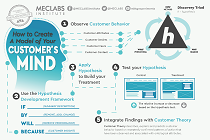
You need a repeatable methodology focused on building your organization’s customer wisdom throughout your campaigns and websites. This infographic can get you started.
Get the Infographic >Infographic: 21 Psychological Elements that Power Effective Web Design
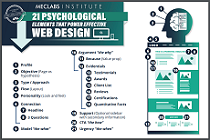
To build an effective page from scratch, you need to begin with the psychology of your customer. This infographic can get you started.
Get the Infographic >